
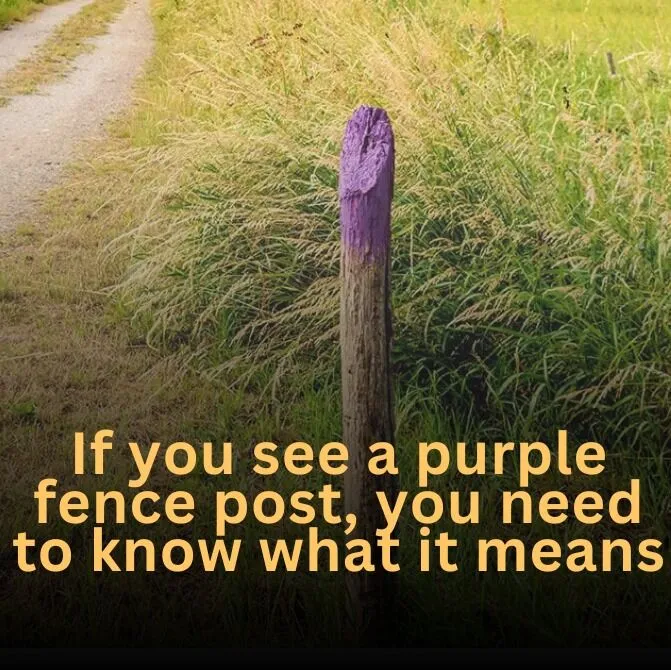
As warmer weather draws more people outdoors, hikers and explorers may spot something unusual: purple-painted fence posts or trees. While they might seem decorative, this color actually carries a legal warning. The purple paint marks private property boundaries and serves the same purpose as a “No Trespassing” sign. Many landowners prefer it because it’s durable, easy to recognize, and less likely to fade or fall over time.
The concept originated in Arkansas in 1987 with what became known as the Purple Paint Law. The idea quickly spread, and today, 22 states officially recognize the color as a legal boundary marker. States such as Idaho and Montana use orange instead, but the message remains identical — entering without permission is prohibited. These laws were designed to make property boundaries clearer, particularly in rural areas where posted signs can be damaged or removed.
To meet the law’s requirements, the paint stripe must be clearly visible: typically 3 to 5 feet above the ground, at least 8 inches long and 1 inch wide, and spaced no more than 100 feet apart. When properly applied, these markings eliminate the need for multiple signs and provide a consistent, easy-to-understand signal to anyone passing by.
So, the next time you’re hiking, exploring, or taking photos near a rural area, keep an eye out for purple posts or trees. They’re not just for decoration — they’re a clear legal notice to respect private property. Understanding the Purple Paint Law helps protect both landowners and visitors, ensuring outdoor adventures stay safe, lawful, and enjoyable for everyone.