
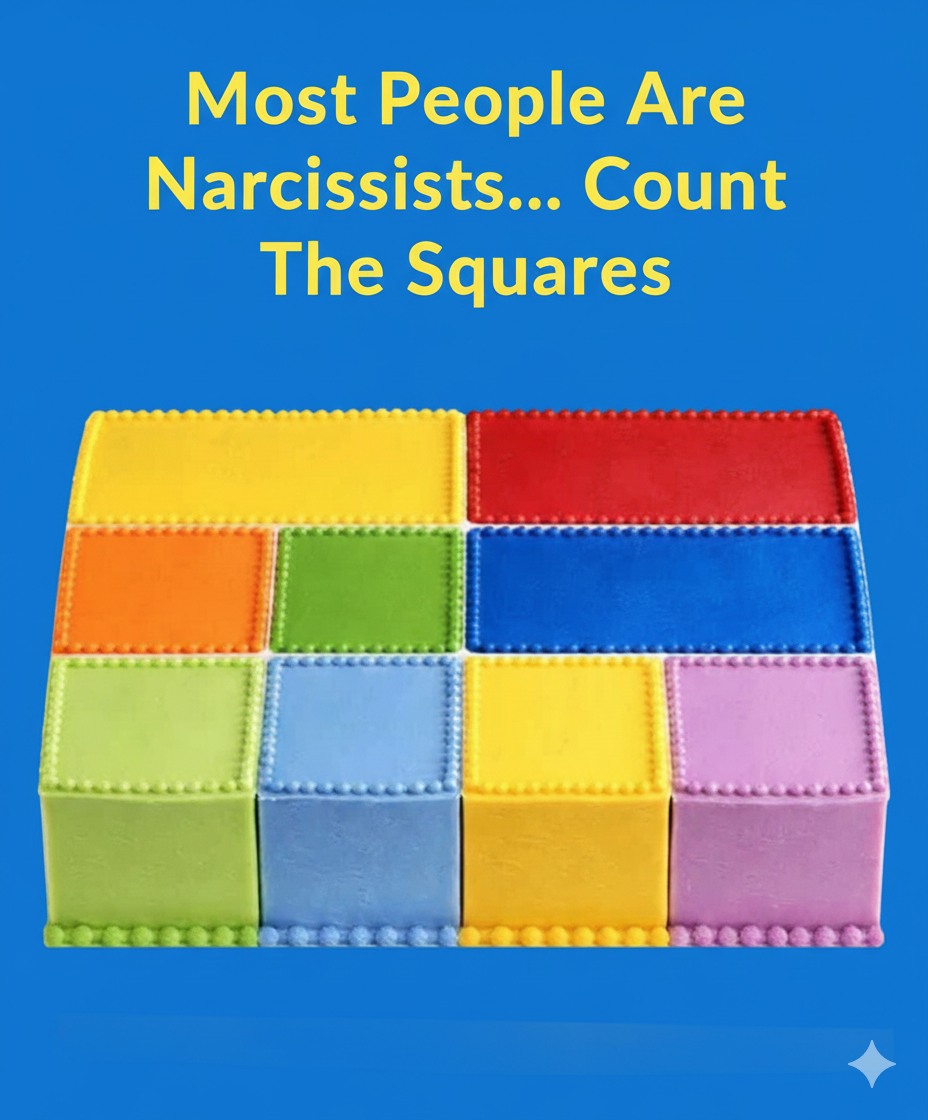
At first glance, a classic “count the squares” puzzle looks like a quick mental exercise—just a stack of geometric blocks waiting to be tallied. Many people assume the answer will come instantly and move on just as quickly. However, the moment you pause and try to count carefully, the challenge becomes more layered. Some squares stand out clearly, while others are partially hidden, overlapped, or implied by perspective. What initially feels straightforward soon demands closer observation and a more thoughtful approach.
These puzzles are less about arithmetic and more about how we interpret visual information. The most visible squares—usually those facing upward—are easy to count, but side-facing or partially obscured ones require extra attention. Some people go further, imagining hidden layers or unseen faces to estimate a complete three-dimensional structure. Because there’s often no single agreed-upon method, different approaches can lead to different answers. This variation reflects how perception works: our brains filter and organize what we see based on focus, expectations, and prior experience.
Interestingly, reactions to these puzzles often reveal as much about human behavior as they do about visual perception. Bold or provocative captions can shift the tone from curiosity to defensiveness, especially when they suggest there is only one “correct” way to think. Instead of exploring possibilities, people may rush to defend their answers, turning a simple puzzle into a debate. This dynamic highlights common cognitive tendencies such as confirmation bias, selective attention, and anchoring—patterns that influence not just puzzles, but everyday thinking and decision-making.
In the end, the value of these puzzles goes far beyond counting shapes. They encourage patience, flexible thinking, and clarity in defining rules or assumptions. When we take the time to consider multiple perspectives and remain open to alternative interpretations, we strengthen our ability to reason and collaborate. The real takeaway is not the final number, but how we approach complexity, handle uncertainty, and learn to see more clearly.