
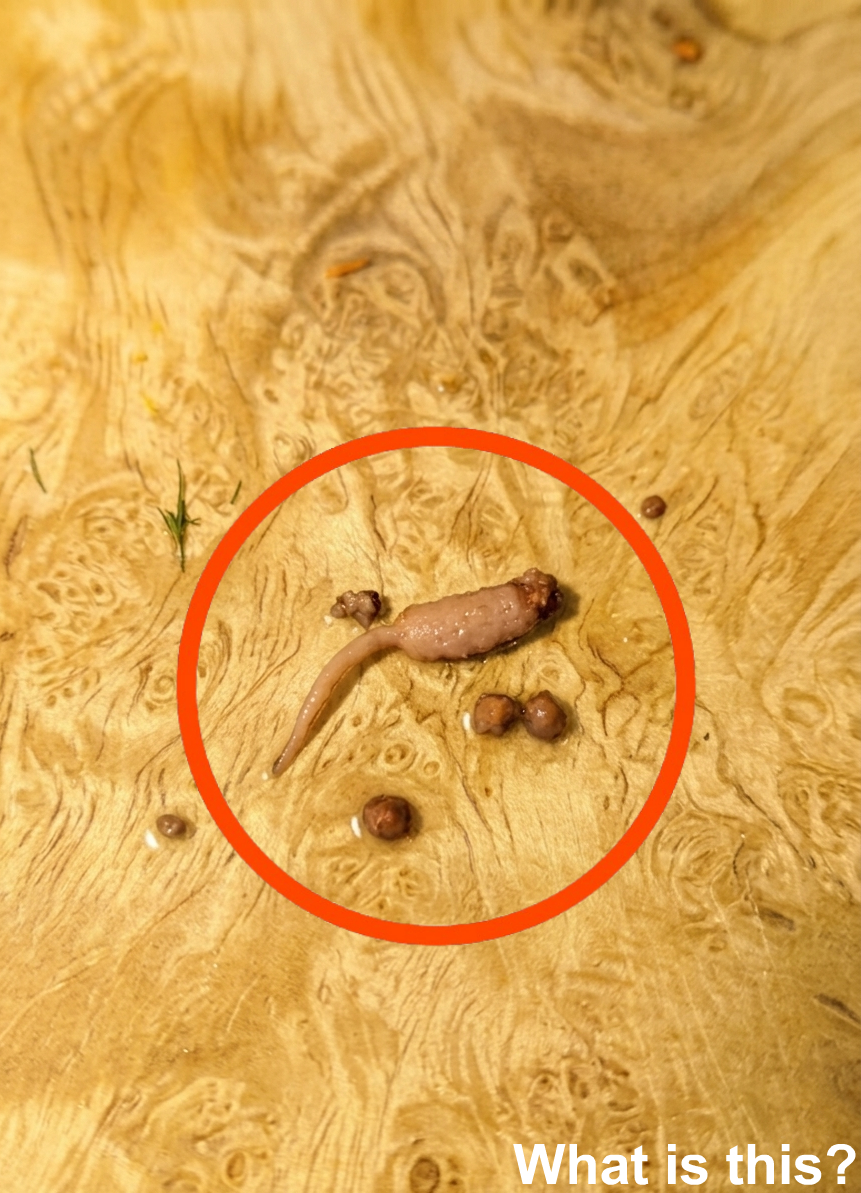
At first, it’s easy to feel alarmed. You notice something unusual in your food—something that doesn’t look quite right—and your mind jumps to the worst conclusions. But once the initial shock settles, curiosity often takes over. Taking a closer look, maybe even snapping a photo and zooming in, can reveal more than that first unsettling glance suggested.
With a bit of attention, what seemed suspicious usually starts to look more familiar. Instead of something structured or segmented, it often appears as a pale, stringy strip—irregular and soft rather than defined. In many cases, this turns out to be a piece of connective tissue, such as fat or tendon, that has reacted to heat in an unexpected way.
Ground beef isn’t made up of perfectly uniform muscle. It naturally includes small amounts of fat, gristle, and connective tissue. When exposed to heat, these components can shrink, tighten, and twist, sometimes forming shapes that look surprisingly unfamiliar or even unsettling. It’s a normal reaction during cooking, even if the result can be visually misleading.
While the appearance may be off-putting at first, there’s usually no cause for concern. What looks alarming is often just a harmless part of the meat behaving differently under heat. Understanding this makes the experience far less disturbing—it may not be the most appetizing sight, but it’s typically safe and simply part of how real, unprocessed ingredients respond to cooking.