
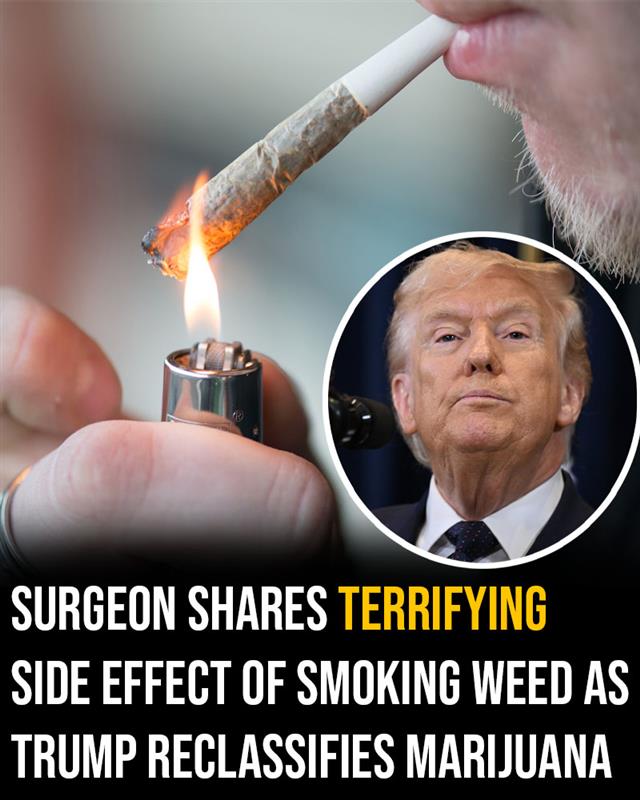
As policymakers debate the future of cannabis regulation, the conversation inside operating rooms tells a more sobering story. Heart surgeon Jeremy London has described what he encounters during procedures on habitual marijuana users: lungs darkened and damaged in ways that resemble long-term exposure to heavy pollutants. Some of these patients insist they’ve never smoked tobacco, yet their bodies show signs typically associated with chronic inhalation of harmful substances. For London, the contrast between public perception and clinical reality is impossible to ignore.
The concern extends beyond lung appearance. According to his observations, certain patients arrive with severely narrowed or blocked arteries, sometimes requiring urgent bypass surgery to survive. While lifestyle, genetics, and diet all play roles in cardiovascular health, London suggests that frequent inhalation of any kind of smoke—including cannabis—may contribute to these serious conditions. It’s a reminder that “natural” doesn’t automatically mean harmless, especially when the method of consumption involves combustion.
At the same time, broader changes in cannabis policy are underway. Efforts to reclassify marijuana could open the door to more rigorous scientific research, improved medical applications, and clearer safety standards. Many experts welcome this shift, noting that better data will help separate myths from evidence. Still, clinicians like London emphasize that progress in policy should be matched with honesty about potential health risks.
For individuals, the takeaway is less about fear and more about informed choices. Understanding how different habits affect the body—especially over time—can help people make decisions that align with their long-term well-being. As research evolves and regulations change, one principle remains steady: the human body responds to physical exposure, not political narratives.