
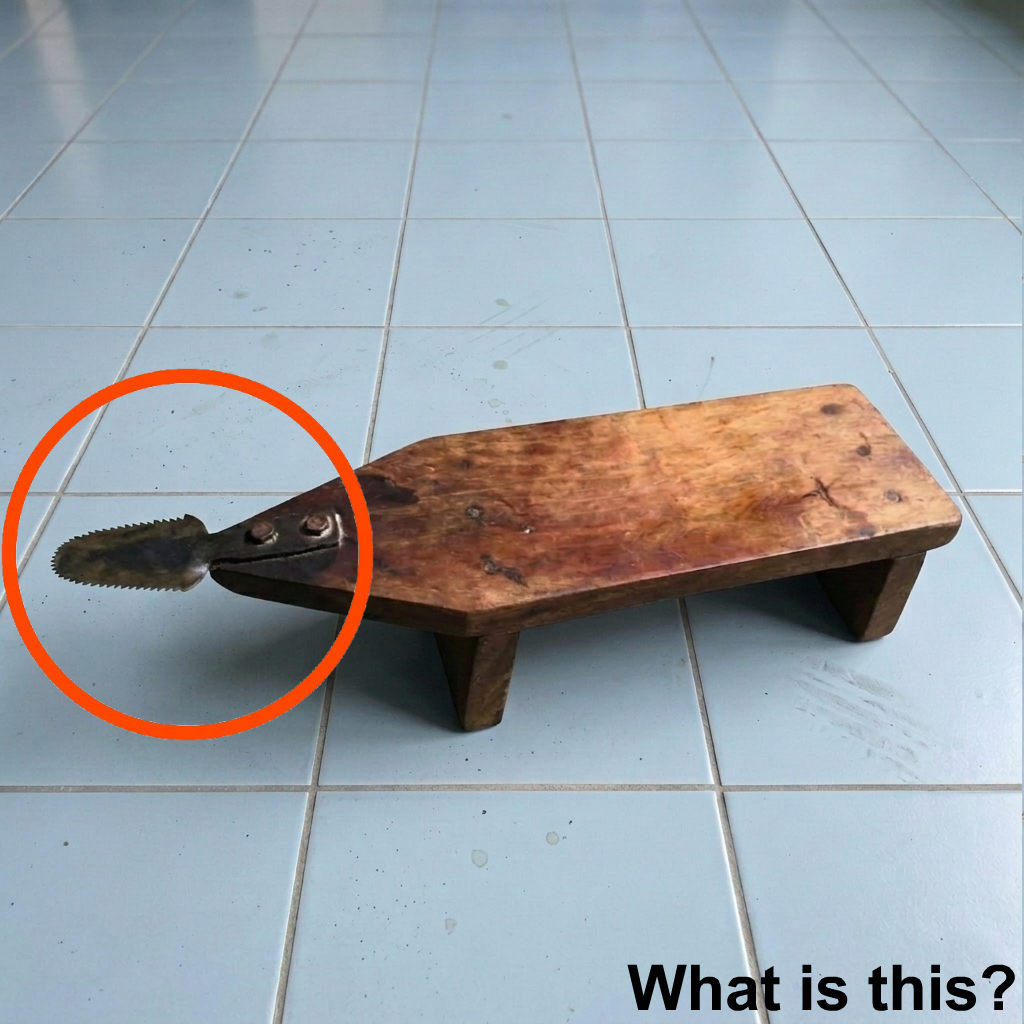
At first glance, the object felt puzzling—almost unsettling. A small wooden seat with a protruding metal piece, shaped with sharp, uneven teeth, didn’t immediately suggest anything familiar. It looked too precise to be random, yet too unusual to fit into everyday tools most people recognize.
The turning point often comes with context. Objects like this were designed for a very specific purpose, shaped by the needs and traditions of the places they came from. In many tropical regions, this kind of tool is used to process coconuts—an essential part of daily cooking. The design, though unfamiliar, is actually highly practical.
A traditional coconut scraper works by having the user sit on the wooden base while holding a halved coconut against the serrated metal edge. By pressing and rotating the coconut, the white flesh is grated efficiently into fine shreds. What looks like a strange or even harsh design is actually tailored for control and precision.
Discoveries like this are a reminder that not every unfamiliar object is mysterious in the way we first imagine. Often, it’s simply a piece of everyday life from another place or time—something functional, shaped by experience, and quietly meaningful once understood.