
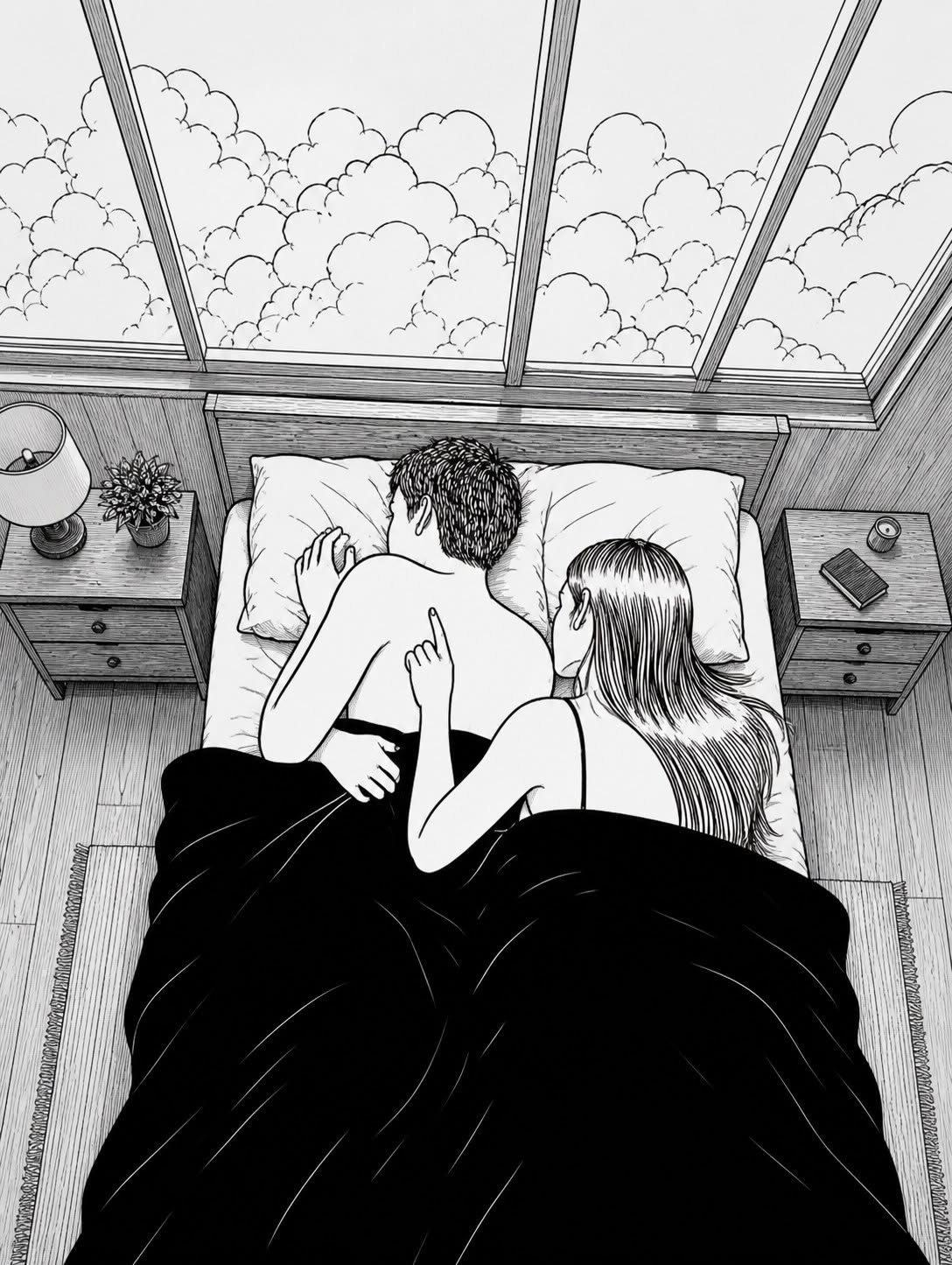
If your partner sleeps with their back turned toward you, it does not necessarily indicate a problem in the relationship. In many cases, sleeping positions are influenced more by comfort than by emotions. Factors such as room temperature, mattress size, personal space, and preferred sleeping posture often determine how people naturally settle in for the night.
Relationship experts note that sleeping back-to-back can actually be a sign of security and trust. Couples who feel comfortable with one another may not feel the need to maintain physical contact throughout the entire night. This position can allow both individuals to rest more comfortably by reducing disturbances caused by movement or body heat while still sharing the same space.
However, changes in sleeping habits can sometimes reflect what is happening outside the bedroom. If a partner suddenly begins sleeping farther away after a disagreement or during a stressful period, it may simply be a temporary way of processing emotions or seeking a little personal space. On its own, this behavior is not a reliable indicator of relationship trouble, but it may be worth considering alongside overall communication and daily interactions.
Ultimately, there is no single “correct” way for couples to sleep. Every relationship develops its own routines and comfort levels over time. Open communication, mutual understanding, and respect for each other’s individual needs are often far more important indicators of a healthy partnership than any particular sleeping position.