
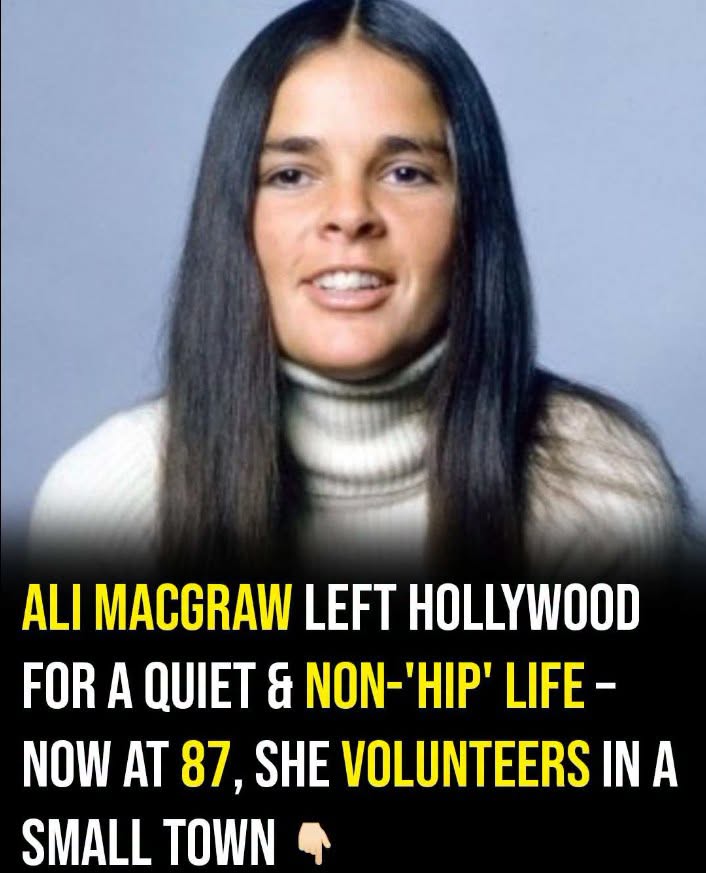
Ali MacGraw rose quickly to international fame, becoming a defining face of early 1970s cinema with Love Story. Her success brought awards, recognition, and a level of visibility that few achieve so early in their careers. But behind that ascent was a more complicated personal history—one shaped by a difficult upbringing and a relentless pressure to succeed in an industry that rarely slows down.
Her relationship with Steve McQueen became one of the most talked-about chapters of her life. It was intense, deeply felt, and ultimately challenging. MacGraw stepped away from parts of her career during that time, a decision that reflected not just love, but the complexity of balancing personal relationships with professional momentum. The years that followed included setbacks, both in film and in her personal well-being, leading her to seek help and rebuild from within.
That turning point marked a shift rather than an ending. Moving away from Hollywood’s constant spotlight, MacGraw chose a quieter life in New Mexico. There, she focused on community work, animal welfare, and personal wellness, creating a lifestyle that felt grounded and self-directed. Supporting her son, Josh Evans, as he pursued his own career, became another meaningful part of that chapter.
Today, Ali MacGraw represents something different from the image that first made her famous. Her story is less about what was left behind and more about what was reclaimed—control, balance, and authenticity. In stepping away from the expectations of fame, she found a different kind of presence, one defined not by spotlight, but by choice.