
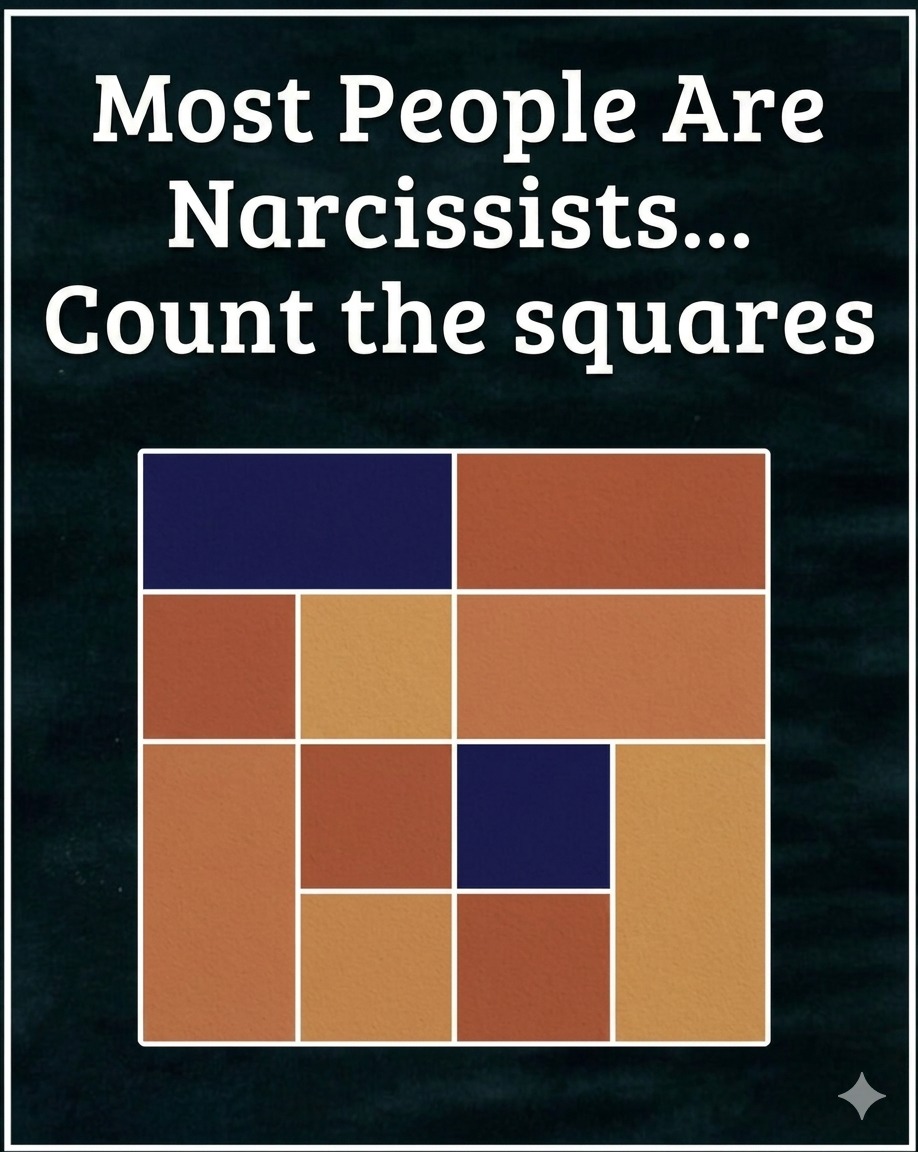
At first glance, a “count the squares” puzzle looks like a quick visual task—just scan the image and give an answer. But once you start looking more closely, it becomes clear that it’s less about eyesight and more about how we think. These puzzles invite you to notice patterns, overlapping shapes, and hidden structures that aren’t immediately obvious.
What makes them interesting is how differently people approach them. Some rely on their first impression, quickly counting the most visible squares and feeling confident in their answer. Others take a slower route, breaking the image down piece by piece, checking for smaller or combined shapes that might be easy to miss. The puzzle itself doesn’t change—but the strategy does.
That contrast reveals something deeper. A fast, instinctive approach can be efficient, especially when time matters, but it can also lead to missed details. A more deliberate method often uncovers more accurate results, though it requires patience and focus. Neither approach is “wrong,” but each highlights a different way of processing information.
In a broader sense, puzzles like this mirror real-life decision-making. They show how quickly assumptions can form—and how valuable it can be to pause, look again, and question what seems obvious. Sometimes, the answer isn’t about seeing more—it’s about seeing differently.