
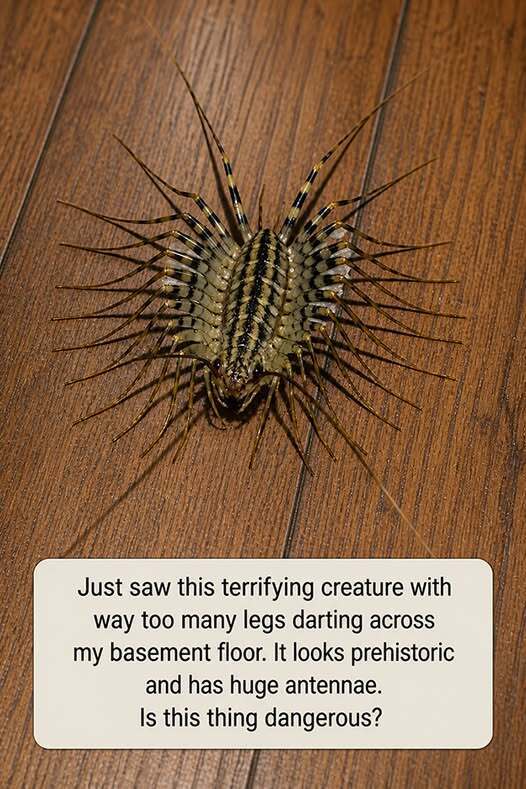
Spotting a fast-moving, many-legged insect darting across your basement floor can feel like something straight out of a nightmare. But in most cases, that unsettling creature is likely a House centipede — an insect known more for its frightening appearance than any real danger to humans. These creatures are commonly found in dark, damp areas such as bathrooms, basements, laundry rooms, and crawl spaces where moisture levels are high and smaller insects are plentiful.
Despite their alarming speed and dozens of legs, house centipedes are generally harmless to people. They prefer avoiding human contact and spend most of their time hunting other pests hiding inside the home. Their venom is intended for tiny insects like cockroaches, silverfish, termites, spiders, and ants. Although they technically can bite, incidents are extremely rare and usually result in only mild irritation similar to a bee sting for most people.
In many ways, house centipedes function as natural pest control. Their presence often signals that other insects may already be living inside the home, since they rely on those pests as a food source. By feeding on unwanted bugs, they can quietly help reduce infestations before homeowners even realize there’s a problem developing behind walls or under floors.
For those who still find them unsettling, there are simple ways to reduce encounters without harsh chemicals. Lowering indoor humidity, fixing leaks, improving ventilation, and sealing cracks around doors or foundations can make your home less attractive to both centipedes and the insects they hunt. You may never enjoy seeing one sprint across the floor — but understanding their role could make that creepy basement visitor seem a little less terrifying.