
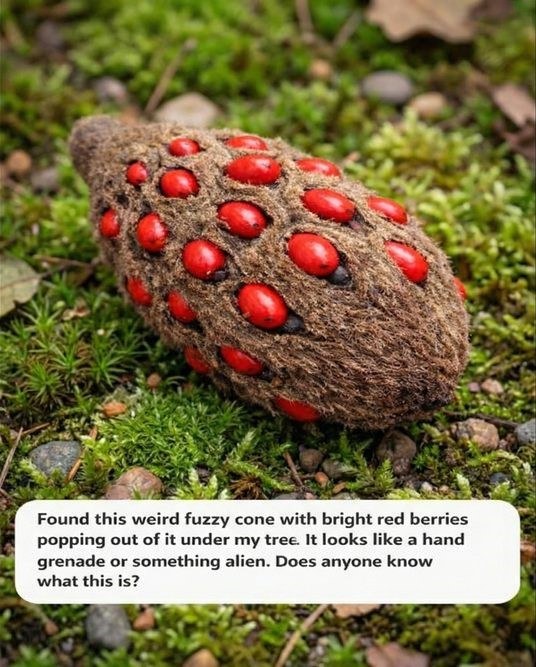
Finding an unusual object in your yard can quickly spark curiosity, especially when it looks almost too strange to be natural. One common discovery is a fuzzy, cone-shaped pod with bright red seeds peeking through its surface. While it may appear mysterious at first, this eye-catching object is actually the seed pod of a Magnolia tree — a popular ornamental tree admired for its large fragrant flowers and glossy leaves.
After magnolia blossoms finish blooming, the tree begins forming seed pods where the flowers once grew. Throughout the summer, these pods slowly mature, becoming larger, firmer, and more textured. By late summer or autumn, the pods dry and split open, revealing vibrant red seeds inside. The bright color serves an important purpose in nature, attracting birds and small wildlife that help spread the seeds to new locations as they feed.
Many varieties of Magnolia trees are found throughout the southeastern United States and other warm regions, though some species also grow in cooler climates. Certain magnolias remain evergreen year-round, while others lose their leaves seasonally. The seed pods often develop a soft or fuzzy texture before fully drying out, which is why they can look unfamiliar or even artificial when first discovered on the ground beneath the tree.
Although magnolia seeds are not considered highly toxic, they are not meant for human consumption and may cause mild stomach discomfort if eaten. Their primary role is ecological, helping support wildlife and continue the tree’s natural life cycle. Many homeowners simply allow fallen pods to decompose naturally and enrich the soil, while others collect the dried pods for decorative crafts or seasonal arrangements. What first appears strange or mysterious often turns out to be another fascinating detail of the natural world quietly unfolding in the backyard.