
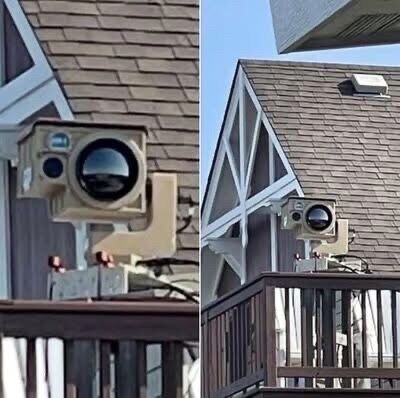
It often starts with something small—an object that doesn’t quite belong. In this case, a metal structure on a balcony caught attention, first dismissed as ordinary equipment, then reconsidered as something far more sophisticated. Its design, with advanced optics and tracking-like features, raised eyebrows and questions. When something unfamiliar appears without explanation, it’s natural for curiosity to turn into concern, especially in places where routine and trust usually define daily life.
As more neighbors took notice, the uncertainty grew. Photos circulated, speculation followed, and the lack of clear information left room for assumptions. When technology looks capable of surveillance—whether it actually is or not—it can feel invasive. The key here is to recognize how quickly perception shapes reality. Without communication, even defensive or harmless systems can be interpreted as intrusive, particularly in close-knit residential settings.
If you ever find yourself in a similar situation, the most effective response is grounded, not reactive. Start by seeking clarity through appropriate channels—this might mean speaking calmly with the homeowner if it feels safe, or contacting local authorities or municipal offices to understand regulations. Many regions have clear rules about surveillance equipment and what’s permitted in residential zones. Getting accurate information helps replace fear with facts.
Ultimately, situations like this highlight a broader challenge: balancing personal security with shared community comfort. Technology continues to evolve faster than social norms around it, and not every installation comes with context or explanation. Maintaining trust requires openness on all sides. When questions arise, approaching them with calm inquiry rather than assumption can help preserve both safety and neighborly relationships.