
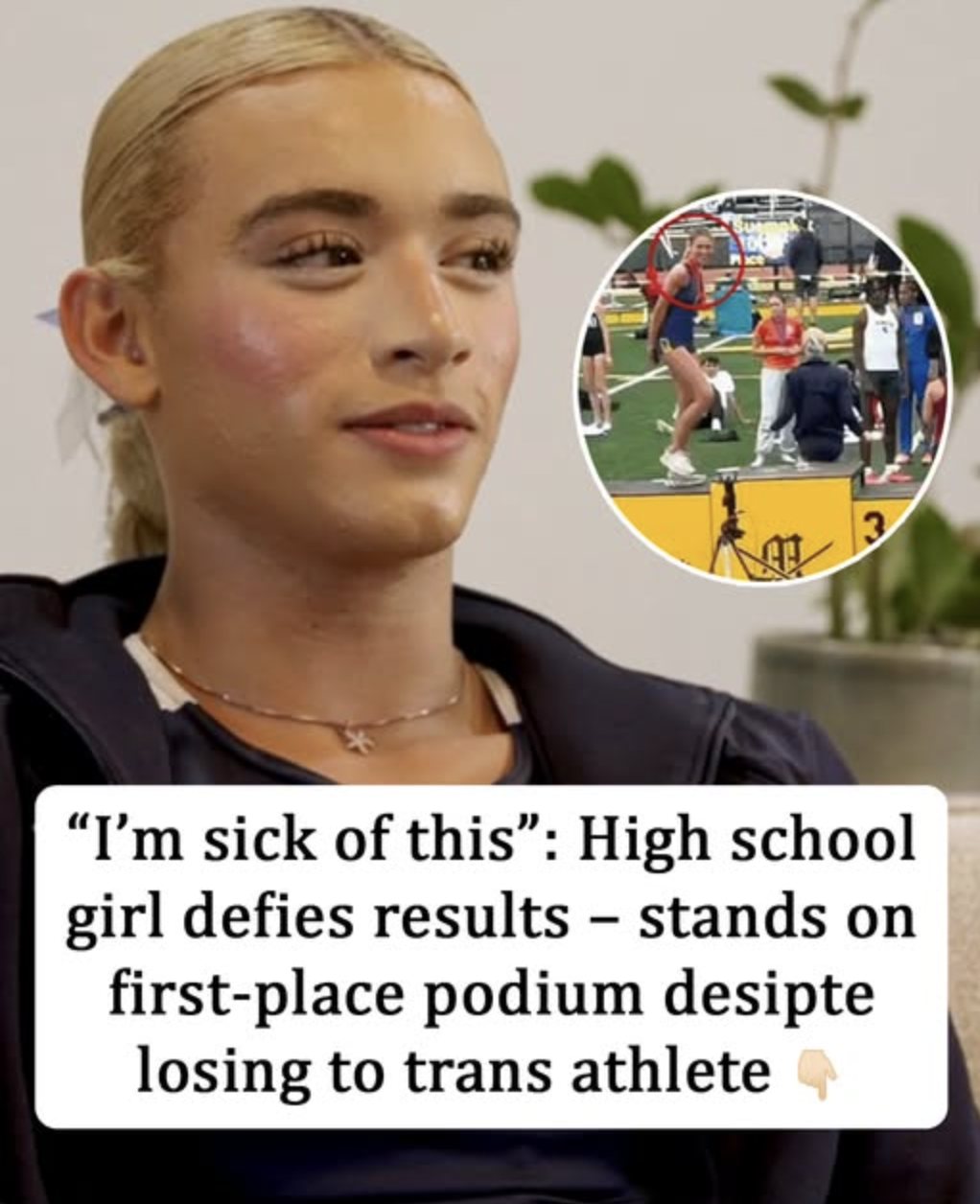
A recent high school track and field competition in California has drawn national attention after a podium ceremony became the focus of a broader discussion about athletics, fairness, and participation policies. The moment involved student-athletes competing under rules established by governing bodies and school athletic organizations, but the reactions that followed extended far beyond the competition itself. As videos and photos circulated online, the event quickly became part of a larger conversation taking place across the country.
Supporters of athlete Reese Hogan viewed her actions as a statement about competitive fairness in girls’ sports. Many argue that athletic policies should prioritize maintaining equal opportunities for female competitors and believe that questions surrounding eligibility deserve continued discussion. For these observers, the podium moment reflected concerns that have been building within youth sports communities for several years.
Others focused on the experience of AB Hernandez, noting that student-athletes who compete under established rules often find themselves at the center of controversies they did not create. Advocates for inclusion emphasize that young athletes should be treated with dignity and respect regardless of public disagreements about policy. From this perspective, criticism directed at individual competitors can place significant emotional pressure on teenagers who are simply participating in their chosen sport.
The broader issue remains complex and continues to evolve as policymakers, athletic organizations, educators, parents, and researchers debate how to balance fairness, inclusion, and competitive integrity. Different states and governing bodies have adopted different approaches, and public opinion remains divided. While legal and policy discussions continue, many observers agree on one point: young athletes should not bear the burden of resolving questions that adults and institutions are still actively working to address. The challenge moving forward is finding solutions that respect both competitive concerns and the well-being of all students involved.