
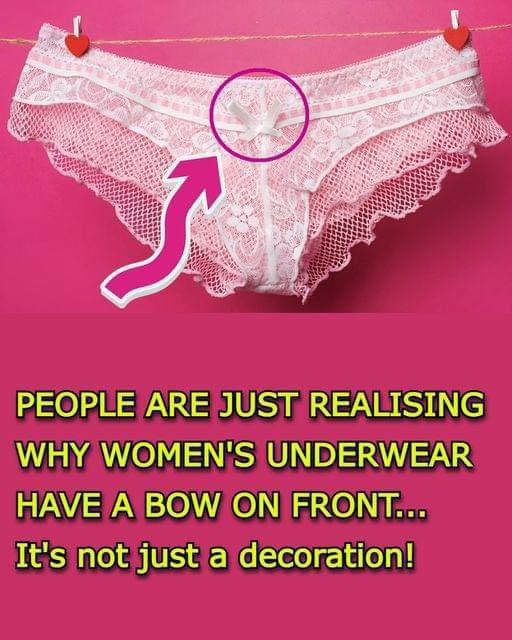
If you’ve ever noticed the small bow stitched onto the front of certain undergarments, you might assume it’s purely decorative. In reality, this little detail has long doubled as a practical guide. When getting dressed quickly or in dim lighting, it can be surprisingly difficult to tell the front of a garment from the back. That tiny bow offers an instant visual and tactile cue, helping you orient the piece without fumbling or guessing.
The origin of this design dates back centuries, long before elastic waistbands existed. In earlier times, garments were held up using a thin ribbon threaded through small channels along the top edge. Because tying a bow behind one’s back was inconvenient—especially during early mornings lit only by candlelight—the ribbon was almost always fastened in the front. This practical placement made dressing quicker, easier, and far less frustrating.
When elastic eventually replaced ribbon ties, the bow no longer served a structural purpose, yet manufacturers kept it as a familiar visual marker. What began as a functional necessity slowly transitioned into a recognizable design detail that helped wearers instinctively know which side was which. Over time, it became both a styling choice and a subtle nod to the garment’s historical roots.
Today, that tiny bow still plays both roles. It adds a delicate finishing touch while offering a small but useful guide when getting dressed in a hurry. Though simple, this detail represents generations of practical clothing design—proof that even the smallest features can reflect the clever solutions of the past while continuing to make everyday life just a little bit easier.