
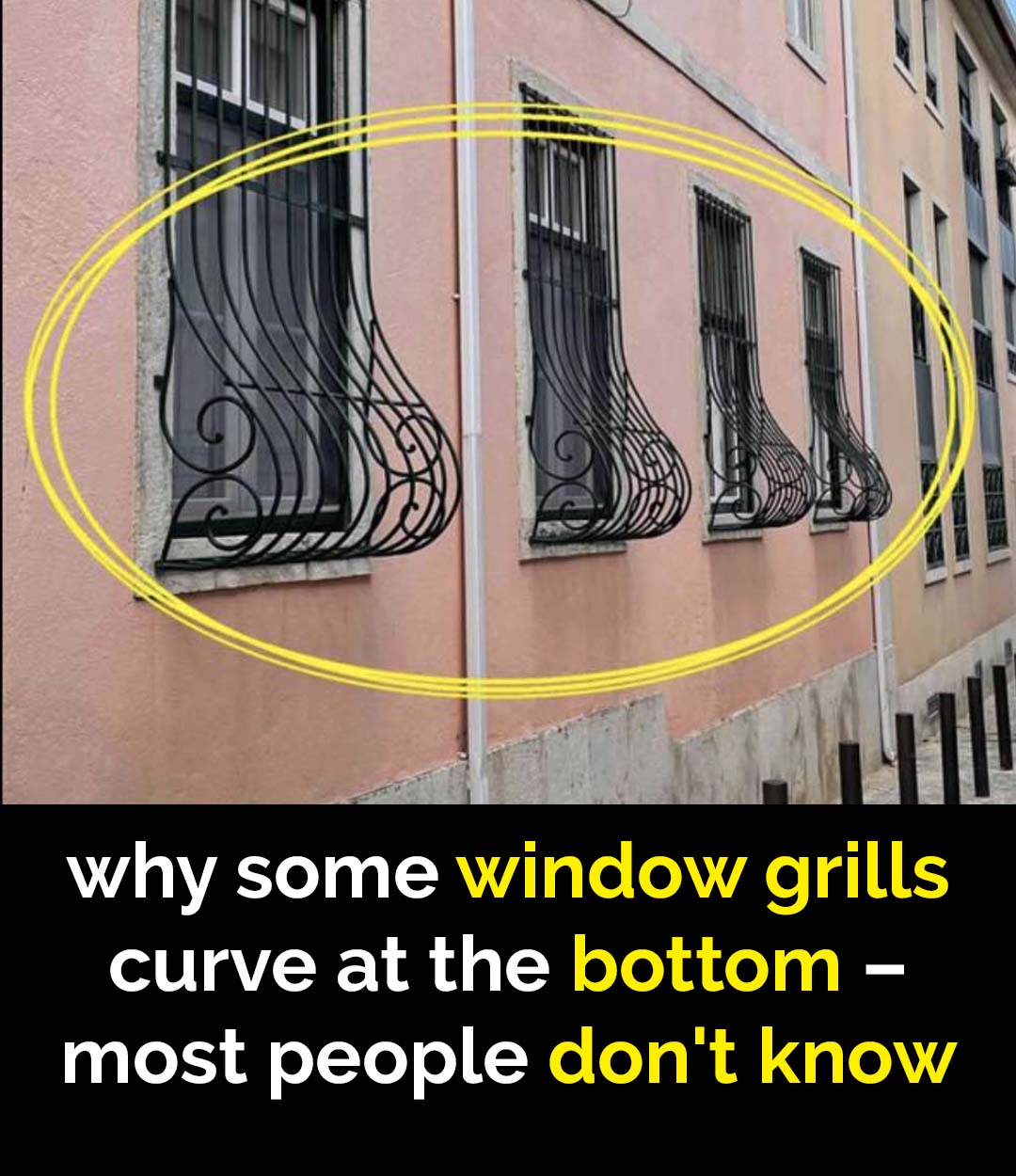
Window grills were originally designed with one clear purpose: security. In many urban areas, especially in older buildings, metal bars added a layer of protection where glass alone wasn’t enough. Over time, however, a small design change—the outward curve at the bottom—introduced a practical and surprisingly thoughtful upgrade that went beyond basic safety.
That curved shape, often called a “potbelly,” creates extra space just outside the window. This makes it ideal for holding flower boxes, allowing residents to add greenery and color even in tight city environments. It also provides support for window-mounted air conditioning units, which are common in apartments where interior space is limited. In this way, the design turns a purely protective feature into something functional and even decorative.
Beyond practicality, these grills also carry a subtle visual message. They suggest a balance—security without feeling closed off, structure softened by thoughtful design. Instead of flat, rigid bars, the curve adds dimension and a sense of openness, making buildings feel more inviting from the outside.
Today, choosing this style is often about more than necessity. It reflects a preference for combining safety with usability and aesthetics. A simple curve transforms a basic feature into something more versatile—proving that even small design details can change how a space looks, feels, and functions.