
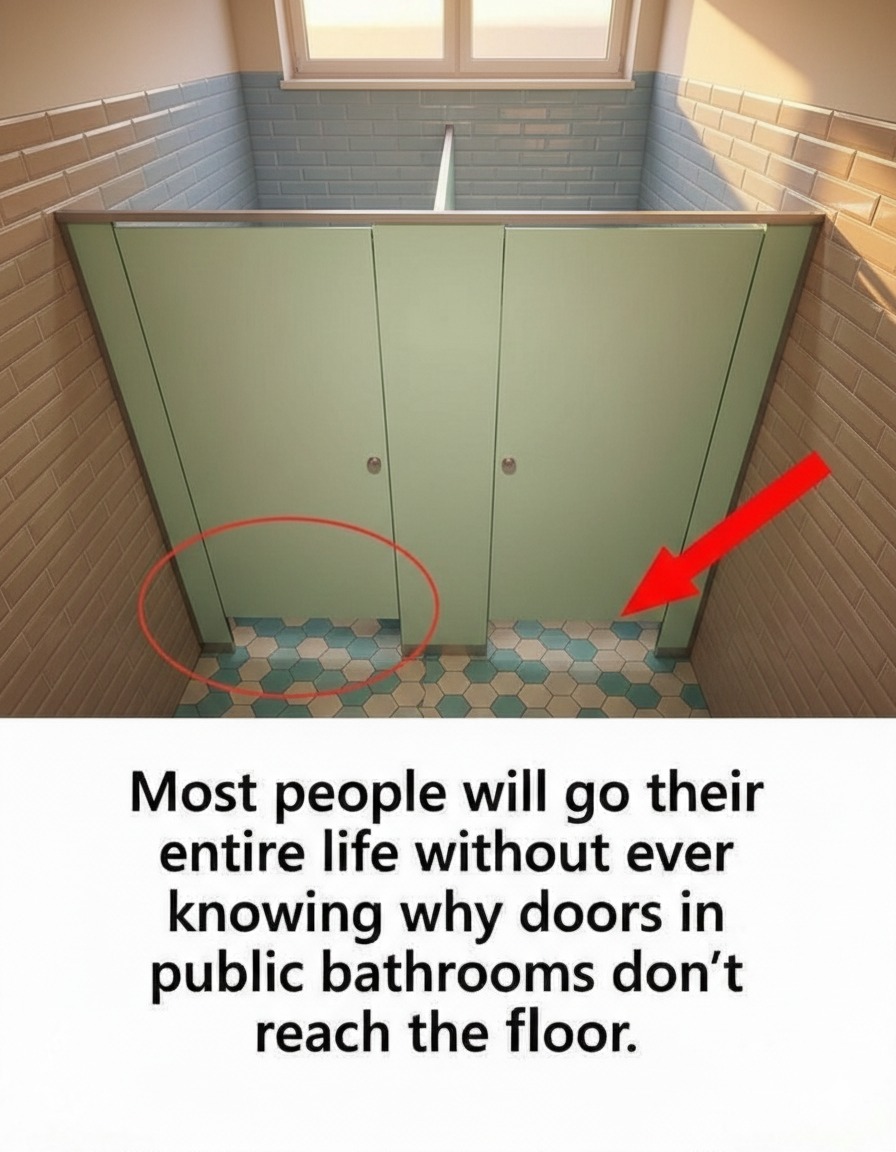
If you’ve ever paused in a public restroom and wondered why stall doors don’t reach the floor, you’re not alone. The visible space beneath the door can feel unusual at first glance. Yet this design isn’t random or careless — it reflects deliberate planning. Architects and facility designers must balance privacy with safety, hygiene, maintenance, and cost efficiency. The gap under stall doors is one small but purposeful detail that supports all of those priorities.
One key reason is safety. In busy public spaces, emergencies can occur unexpectedly. The open space allows staff or first responders to quickly assess whether someone inside may need assistance without forcing entry immediately. It also enables communication if a person becomes ill or unresponsive. By reducing barriers to visibility and access, the design helps shorten response time in urgent situations while still maintaining reasonable privacy for everyday use.
Ventilation is another important factor. Public restrooms experience constant traffic, which makes air circulation essential for comfort and cleanliness. The space beneath the doors promotes airflow, allowing ventilation systems to operate more effectively. This helps reduce lingering odors and moisture buildup — both of which can contribute to an unpleasant or unsanitary environment. Improved circulation supports a fresher atmosphere and easier temperature regulation.
Practical maintenance also plays a role. The open gap allows cleaning crews to mop and sanitize floors more efficiently without needing to open and close each stall. This reduces labor time and limits wear on hinges and locks. While the design may seem minimal, it reflects thoughtful engineering focused on safety, hygiene, and durability. What appears to be a simple gap is actually a functional feature shaped by years of practical experience in public facility design.