
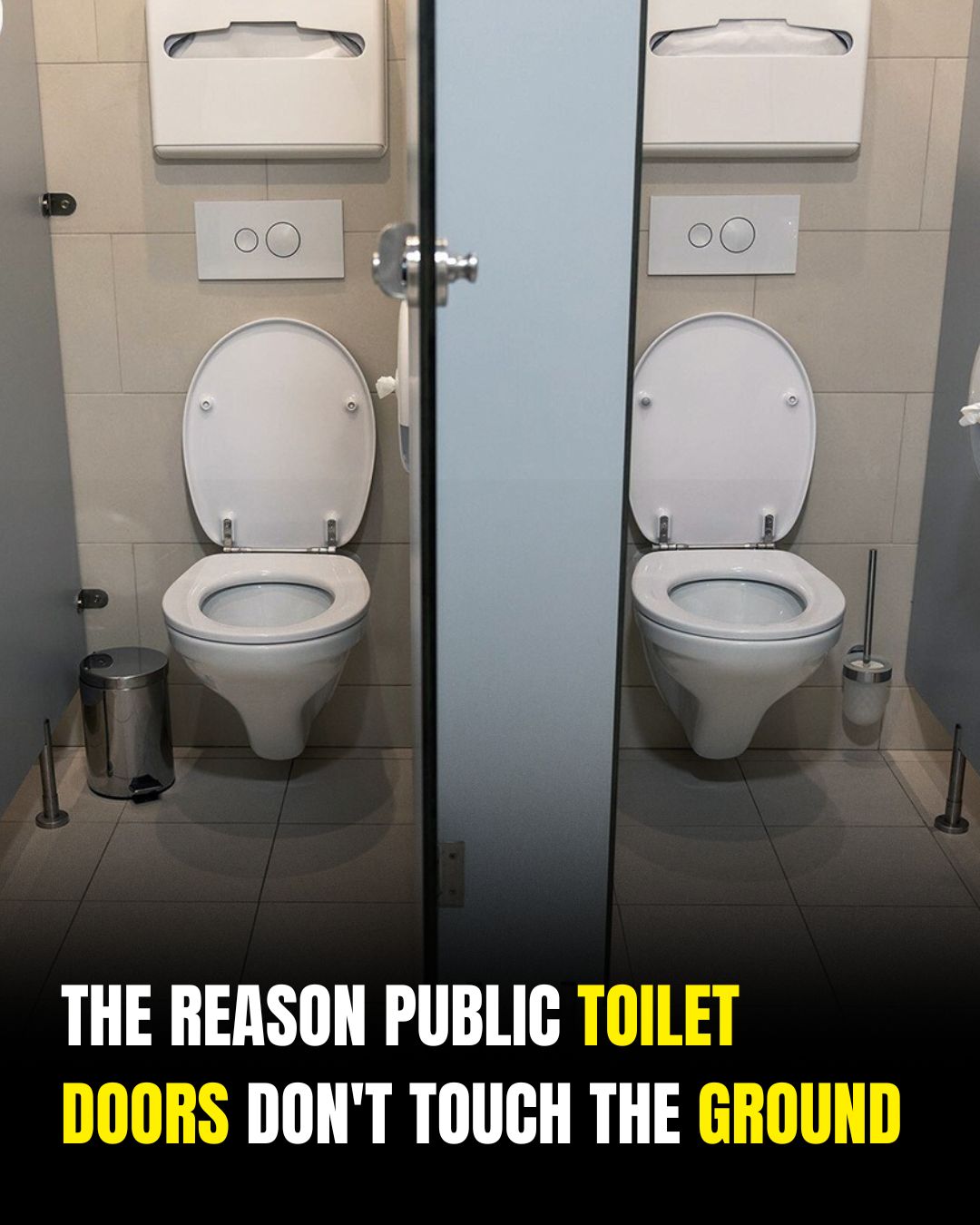
If you’ve ever stepped into a public restroom and noticed that stall doors stop short of the floor, you’re not alone in wondering why. While it may seem like an odd design choice, the familiar gap at the bottom actually serves several practical purposes. Social media creator @mattypstories recently brought renewed attention to the topic, explaining that what looks like a privacy compromise is often a thoughtful balance of safety, hygiene, and efficiency.
One of the primary reasons for the space is safety. In the event of a medical emergency, the gap allows others to quickly assess whether someone inside may need help. It also provides a potential exit route if a lock malfunctions. Though crawling under a stall isn’t ideal, it’s better than being completely trapped. This design feature gives facility managers and emergency responders an added layer of accessibility when it matters most.
Ventilation and cleanliness are also major factors. Public restrooms experience heavy use, and airflow plays an important role in keeping the environment manageable. The opening at the base helps circulate air, reducing odors and improving overall comfort. Additionally, custodial staff can clean floors more effectively without having to maneuver around full-length doors, making maintenance quicker and more thorough.
Finally, shorter doors are more cost-effective and practical in high-traffic spaces. They require less material to manufacture, are easier to install, and are less prone to damage from moisture and contact with the floor. The open space also helps users quickly determine which stalls are occupied, improving flow in busy locations like airports and stadiums. While privacy concerns are understandable, the design ultimately reflects a compromise between individual comfort and public functionality—proving that even small architectural details often have well-considered reasoning behind them.