
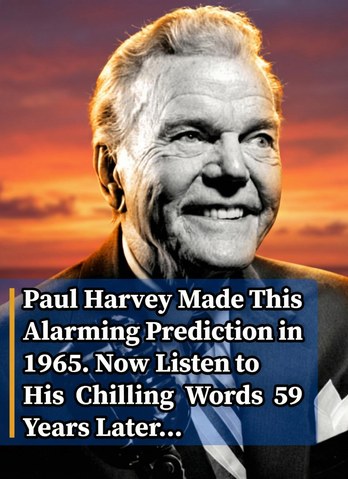
A brief radio message recorded in 1965 by broadcaster Paul Harvey has quietly resurfaced in today’s conversations—not for shock value, but for its striking sense of reflection. Commonly remembered by the phrase “If I Were the Devil,” the commentary is far gentler than many expect. Rather than delivering dramatic warnings, Harvey offers an imaginative, contemplative look at human behavior and social change. What once felt like thoughtful storytelling now reads like a subtle mirror, inviting listeners to consider how values and priorities shift over time, often without us noticing.
Harvey’s message leans heavily on symbolism rather than literal prediction. He explores the idea that societal change rarely arrives with sudden force; instead, it emerges through small distractions, quiet compromises, and shifts in daily habits. In his view, comfort gradually replaces character, noise overtakes reflection, and responsibility yields to convenience. This was a common style of commentary in the 1960s—aimed not at stoking fear, but at encouraging introspection, conversation, and civic awareness. Listeners of the era heard it as a philosophical prompt rather than a prophecy.
Today, the message resonates in a new light. Modern listeners hear echoes of contemporary concerns woven through Harvey’s words—fragmented attention, weakened connections, and the ongoing struggle to stay grounded in a world overflowing with information. Though Harvey spoke long before smartphones, social media, or digital overload, his reflections on distraction and shifting priorities feel surprisingly relevant. His commentary often inspires people to turn inward, examining personal habits rather than assigning blame to the world around them.
Paul Harvey’s enduring appeal lies in his belief that meaningful cultural change begins with personal responsibility. His commentary continues to circulate not because it predicts the future, but because it encourages awareness, balance, and thoughtful decision-making. It reminds us that society is shaped quietly—through the choices we make, the values we uphold, and the lessons we pass forward. Listening to his words today feels less like hearing a cautionary tale from the past and more like receiving a timeless reminder: clarity, intention, and self-reflection matter just as much now as they did generations ago.