
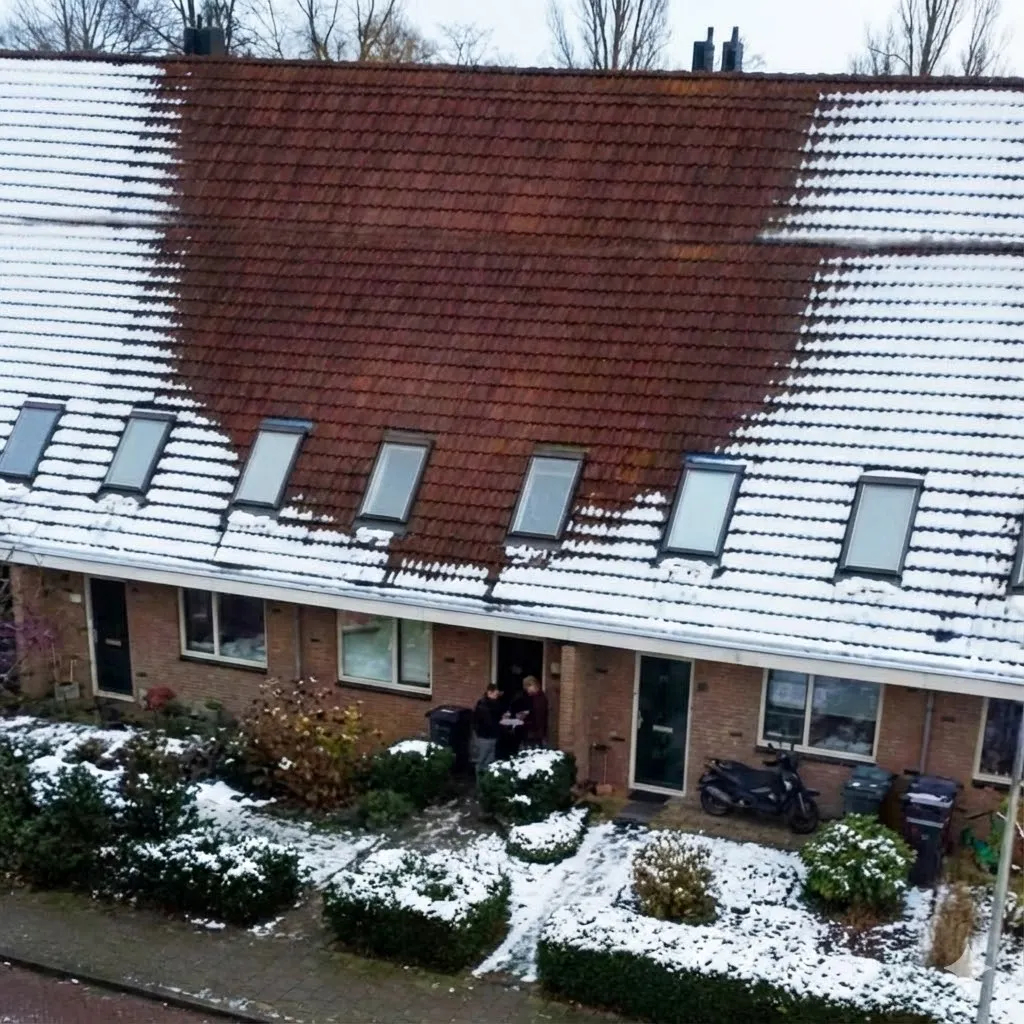
After a heavy snowfall settled over a quiet neighborhood, everything looked uniformly white—cars, sidewalks, trees, and rooftops—except for one house. While nearby roofs steadily gathered snow, this single home remained completely bare, as if winter had skipped it entirely. At first, neighbors brushed it off as a strange weather fluke. But as the snowfall continued and the contrast remained stark, the anomaly became hard to ignore.
Curiosity soon gave way to concern. In cold weather, a roof that refuses to hold snow often signals that heat is escaping from inside the building. Conversations began circulating among residents about poor insulation, heating malfunctions, or even potential fire risks. When the pattern repeated over multiple snowfalls, some neighbors decided it was safer to alert local authorities to ensure nothing dangerous was happening beneath the surface.
An inspection revealed the source of the heat: an unlicensed indoor cultivation setup operating inside the home. High-powered lighting and ventilation equipment generated enough warmth to melt snow instantly upon contact with the roof. While such equipment can be used legally in regulated environments, it was being operated without authorization in this case. In colder regions, situations like this are more easily detected because winter weather makes unusual heat patterns immediately visible.
The incident highlights how small environmental clues can point to larger safety or legal concerns. Uneven snow accumulation isn’t always about weather—it can indicate excessive heat loss, electrical hazards, or building code violations. While laws around certain activities vary by region, unlicensed or large-scale operations remain closely monitored. Sometimes, it’s the simplest observations—like a roof without snow—that help communities identify risks early and keep neighborhoods safe.