
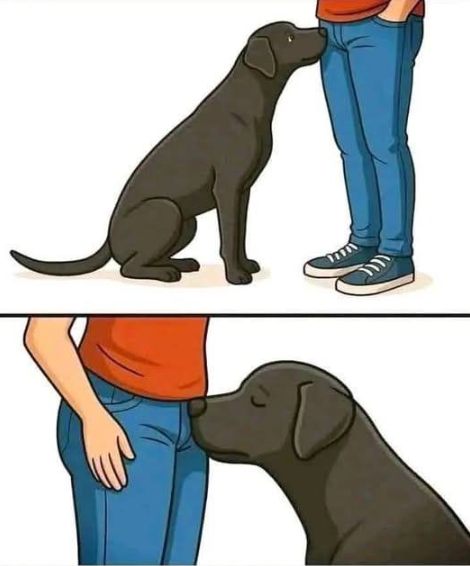
Dogs experience the world primarily through scent, much the way humans rely on sight, speech, and memory. What seems ordinary—or even unnoticed—to us can carry detailed information for them. Their powerful noses help them interpret surroundings, recognize individuals, and assess emotional shifts long before we say a word. To understand certain dog behaviors, it helps to remember that scent is their primary language.
When a dog leans in to sniff someone’s groin area, it can feel awkward—but from a canine perspective, it’s simply information gathering. Humans have scent-producing glands, including apocrine glands concentrated in areas like the groin and underarms. These glands release subtle chemical signals that may communicate details about age, biological sex, stress levels, and general condition. To a dog, this moment is comparable to a handshake or friendly introduction. It’s not meant to be intrusive; it’s instinctive and rooted in curiosity.
If the behavior feels uncomfortable, that reaction is completely valid. The good news is that dogs respond well to gentle guidance. Instead of scolding, calmly redirect their attention. Asking for a “sit” or “stay” before greeting someone sets a clear expectation. Rewarding the desired behavior with praise or a small treat reinforces the alternative response. Consistency is key—over time, your dog will learn that polite greetings bring positive feedback.
Most importantly, remember that this behavior stems from connection, not misbehavior. Your dog is using the sense that makes the most sense to them. By understanding the instinct behind the action and offering patient redirection, you can maintain comfort for everyone involved—while respecting the remarkable sensory world your dog lives in every day.