
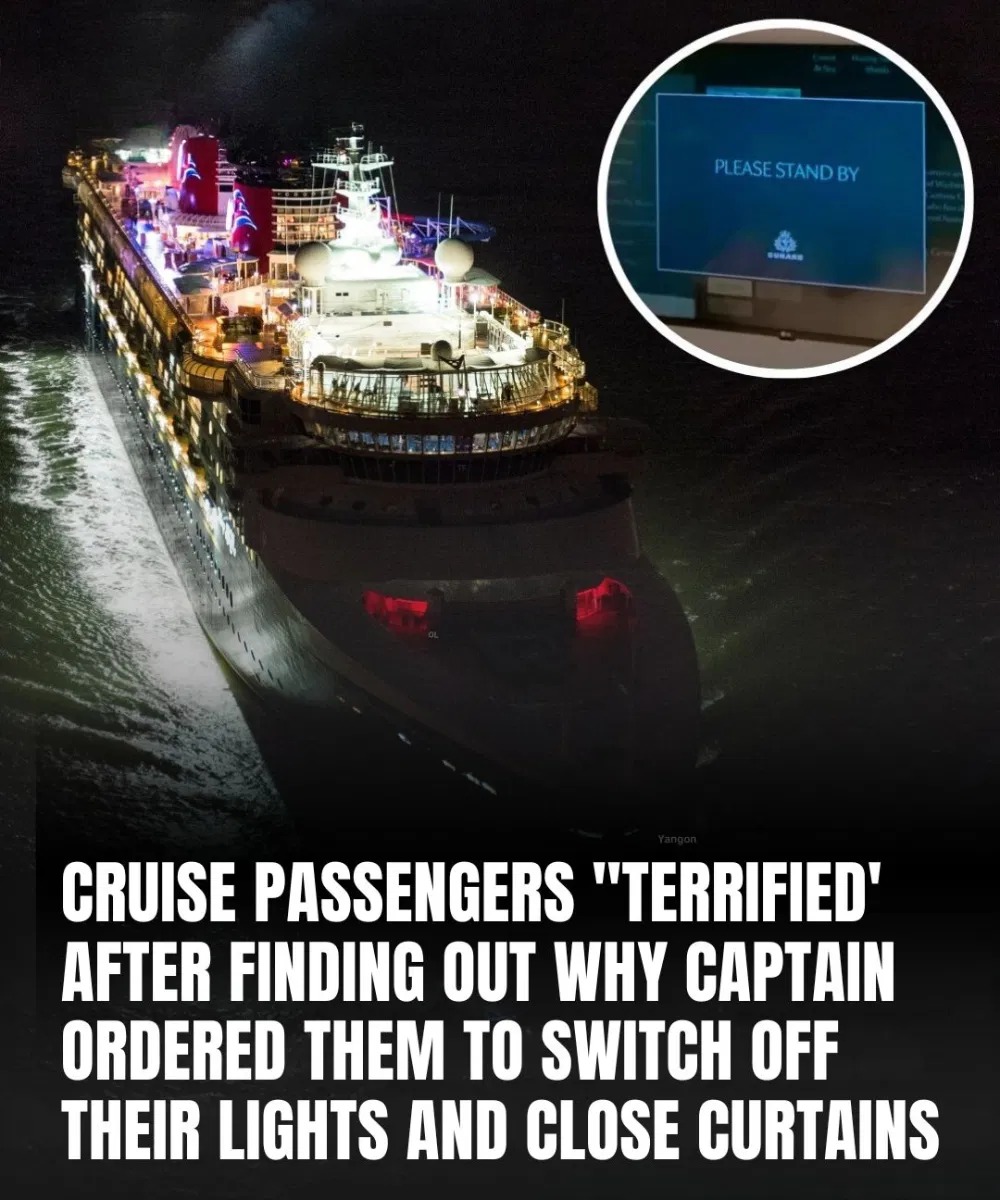
Passengers aboard the Cunard Queen Anne’s 111-night maiden world voyage anticipated days of elegance, calm seas, and scenic horizons. But one quiet evening turned unexpectedly tense when the captain’s voice echoed through the ship: all cabin lights were to be switched off, curtains drawn, and passengers asked to stay away from windows and open decks. Confused murmurs spread through the halls as travelers complied, unsure what to expect next.
The captain soon explained that the ship was crossing the Sulu-Celebes Sea — an area between the Philippines, Malaysia, and Indonesia where piracy, though rare, has occasionally occurred. Out of precaution, the crew dimmed the vessel’s lights to make it less visible at night. For several hours, the grand cruise liner sat cloaked in near-darkness, the usual chatter replaced by whispers and the gentle sound of waves against the hull. Passengers later described the moment as surreal, saying it felt like something from a movie.
A short video of the captain’s announcement later circulated online, sparking surprise among viewers who hadn’t realized that modern ships still take such measures. Maritime experts quickly reassured the public that these steps are part of long-established safety practices for certain routes. Many large vessels, including luxury cruises, travel with trained security personnel and coordinate closely with regional maritime authorities.
While no danger ever approached the Queen Anne, the night left an impression on those aboard. What began as an unsettling experience became a powerful reminder of the sea’s unpredictability and the professionalism of crews who navigate it daily. For a brief moment, the glow of luxury faded into quiet reflection — and passengers gained a newfound respect for the vast and mysterious world beyond the ship’s bright decks.