
In many communities today, the line between financial stability and housing insecurity has grown increasingly fragile. Rising rental costs, limited affordable housing, and overstretched assistance programs have created a reality where a single emergency expense or missed paycheck can dramatically alter someone’s living situation. For countless individuals and families, the margin for error has become painfully thin.
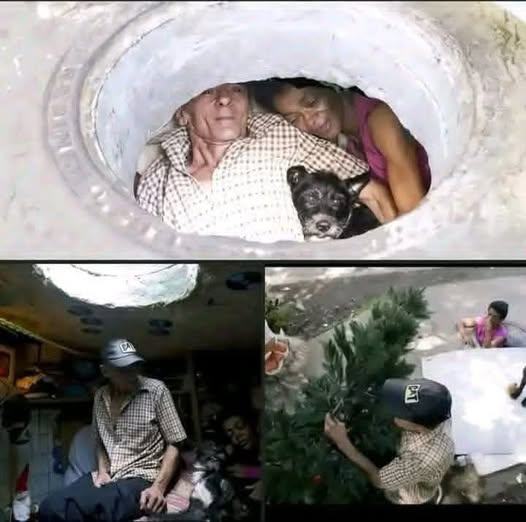
For one couple and their loyal dog, shelter now exists inside a large concrete drainage pipe. This was not a lifestyle choice or a search for novelty. It was a practical response to urgent circumstances. When conventional options disappeared, they adapted in the only way available—securing whatever cover they could find to create a sense of safety.
From the outside, the structure looks like discarded construction material, resting quietly on a patch of land most people would overlook. Few passersby would suspect it serves as someone’s refuge. Yet within its curved concrete walls, signs of daily life appear. A mattress lines one side, carefully positioned for rest. Belongings are arranged thoughtfully to maximize space. Folded clothing, a tucked-away bag, a flashlight or water container nearby—small details reveal an effort to maintain order and dignity despite limited resources.
The conditions are far from comfortable. The narrow interior offers only partial protection from wind and rain. Cold temperatures settle quickly against the concrete, while heat can make the air feel heavy and confined. Still, in the absence of traditional housing, even minimal shelter holds significance. It provides a place to sleep, safeguard possessions, and briefly step away from the uncertainty beyond its walls. In a world where housing security can vanish overnight, this improvised space represents resilience—and a reminder of how urgently stable, affordable homes are needed.