
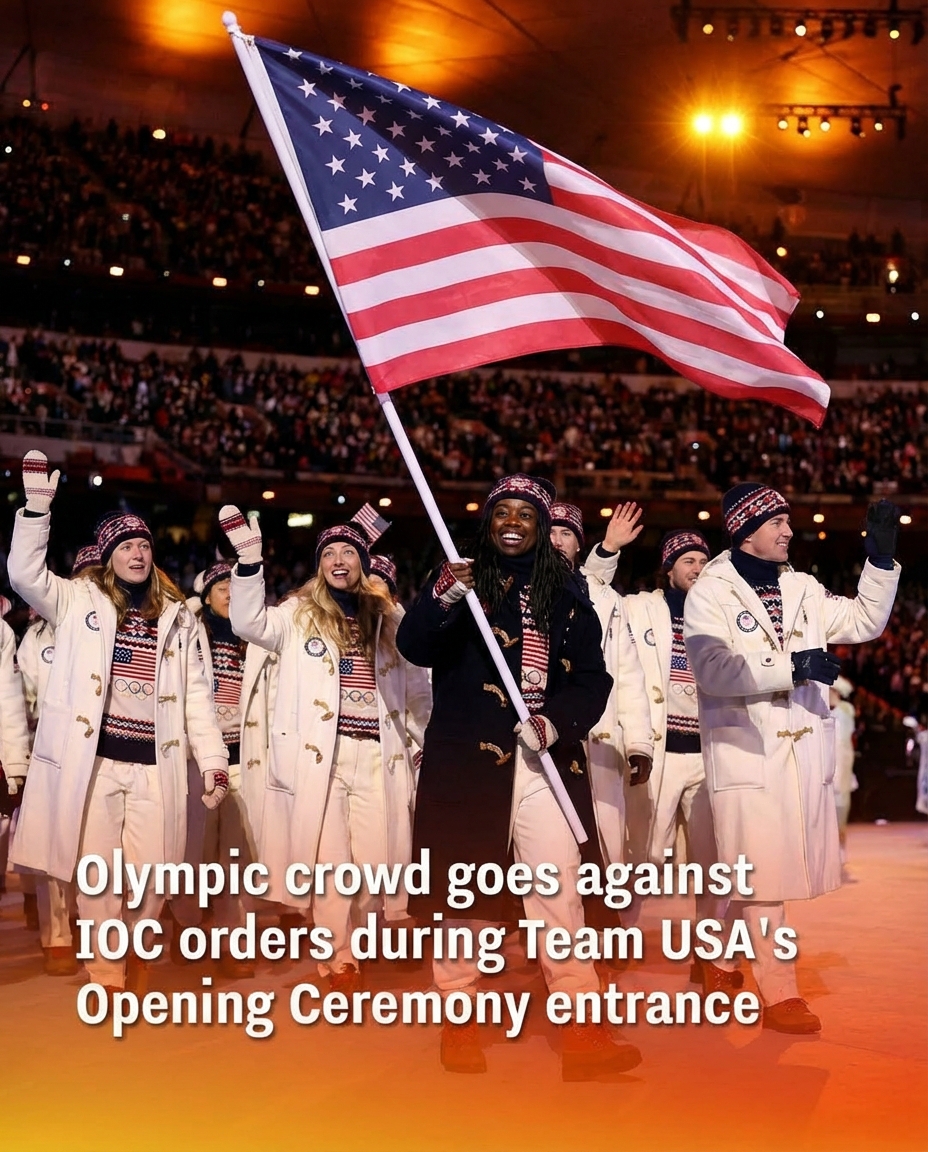
What was intended as a powerful display of international togetherness during the 2026 Winter Olympics opening ceremony quickly became one of the evening’s most discussed moments. As the spectacle unfolded in Milan with dramatic lighting and orchestral grandeur, excitement rippled through the stadium — until Team USA appeared on the massive screens. Instead of universal cheers, noticeable waves of booing echoed from parts of the crowd, abruptly altering the celebratory mood and sparking conversations well beyond the venue.
The reaction didn’t occur in a vacuum. Earlier demonstrations across the city had highlighted frustration tied to U.S. immigration policies, creating an emotionally charged backdrop for the ceremony. Event organizers had encouraged fans to keep political viewpoints separate from athletic competition, yet the incident served as a reminder that global gatherings often reflect the broader climate of public opinion. Social platforms lit up within minutes, with some commentators urging empathy for the athletes, while others framed the response as an example of spectators voicing their perspectives in real time.
The conversation gained additional momentum when Olympic freestyle skier Gus Kenworthy, representing Great Britain, posted a message critical of U.S. immigration enforcement shortly after the ceremony concluded. His comments spread rapidly online, amplifying discussion about whether major sporting events can truly remain insulated from social and political discourse. While Olympic leadership continues to emphasize the Games as a space for unity and mutual respect, moments like this illustrate how challenging that goal can be in a deeply connected world.
Despite the controversy, the ceremony continued with its signature blend of cultural tributes, artistic performances, and the traditional parade of nations — all elements designed to celebrate shared human achievement. Yet for many watching at home and in the stadium, Team USA’s reception stood out as the night’s most memorable scene. It offered a timely reflection on modern international events: even those built to inspire harmony can mirror the complexities and emotions shaping the global conversation.