
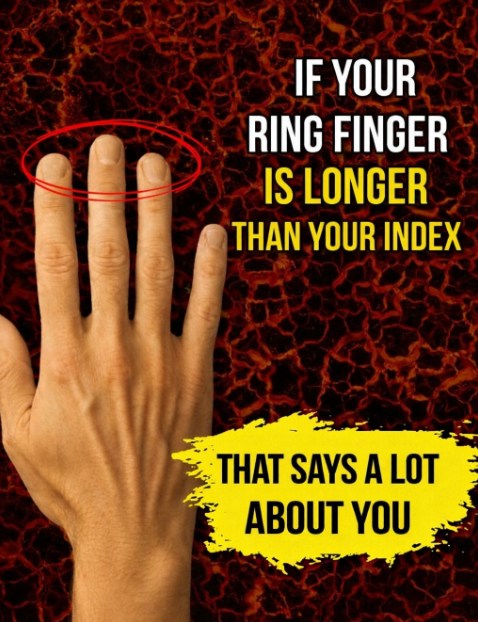
Have you ever taken a quiet moment to truly look at your hands? We rely on them constantly—typing messages, preparing meals, creating art, comforting loved ones. They are instruments of action and connection. Yet beyond their daily function, hands have long fascinated cultures around the world as symbols of identity and meaning. Observing something as simple as your ring finger can become a reflective exercise in self-awareness.
Throughout history, various traditions—from palm reading to cultural folklore—have suggested that the body carries symbolic clues about personality and life paths. While these ideas are not rooted in modern science, they have endured as storytelling tools that encourage introspection. The hands, in particular, were often viewed as a kind of living map—etched with lines and proportions that invite curiosity about character, relationships, and personal growth.
The ring finger has drawn special attention in many traditions. In Western culture, it is associated with commitment and partnership, which is why wedding bands are traditionally worn there. Some symbolic interpretations link its length or shape to creativity, emotional expression, or confidence. For example, a longer ring finger relative to the index finger has sometimes been associated in folklore with boldness or artistic drive, while a more balanced proportion may symbolize harmony and steadiness. Again, these interpretations are cultural narratives rather than scientific measurements.
Ultimately, looking at your ring finger can serve as a mindful pause—a small opportunity to reflect on who you are and how you show up in the world. Whether you see symbolism, tradition, or simply the remarkable design of the human body, the real value lies in self-reflection. Our hands tell stories not through predictions, but through the experiences they help us create every day.