
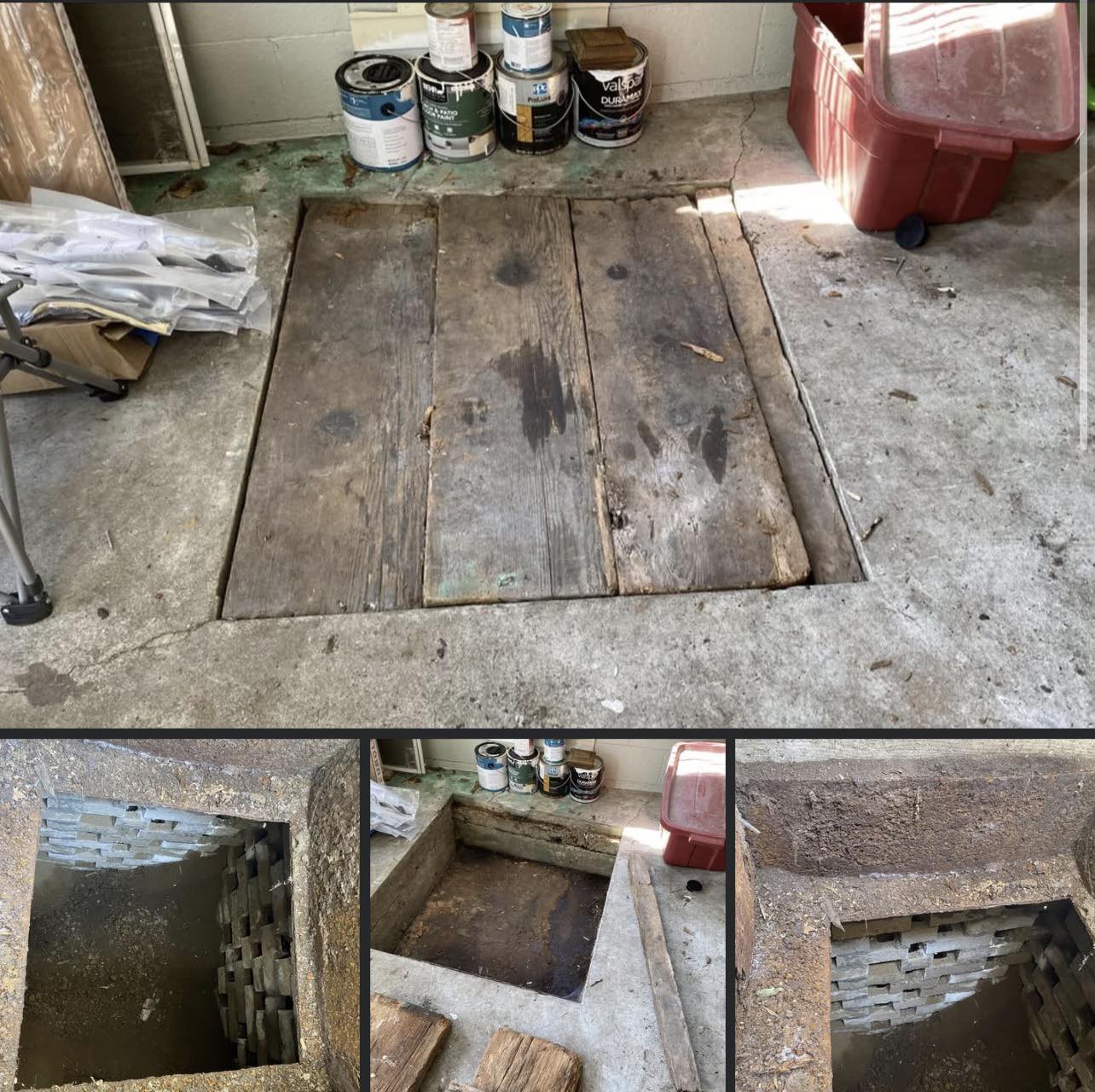
I first thought the damp garage floor was just another old-house problem—maybe cracked concrete or water seepage. But in one corner, a few warped boards caught my attention. They seemed oddly placed, almost as if someone had tried to cover something deliberately. My curiosity grew, and I decided to take a closer look.
Pulling up the loose boards, I expected maybe a forgotten storage spot or random clutter. Instead, I uncovered a large piece of corroded steel that was heavy and difficult to move. After some effort, I managed to lift it, revealing a hidden pit about five by five feet wide and six feet deep. Its walls were neatly built with brick lattice, allowing airflow while keeping pests out, and the air inside was cool and still.
It quickly became clear this wasn’t a sump or waste pit. What I had stumbled upon was a root cellar, likely built in the early 20th century. Before refrigerators were common, families used spaces like these to store vegetables, salted meats, and canned goods. The garage must have been added later, completely hiding the cellar from view.
When I shared the discovery online, others responded with stories of similar finds—old farmhouses with hidden cellars filled with mason jars, preserved food, and family history sealed away beneath the floors. What began as a suspicion of water damage turned into uncovering a fascinating piece of the home’s past, a reminder of how everyday places can hold unexpected connections to history.