
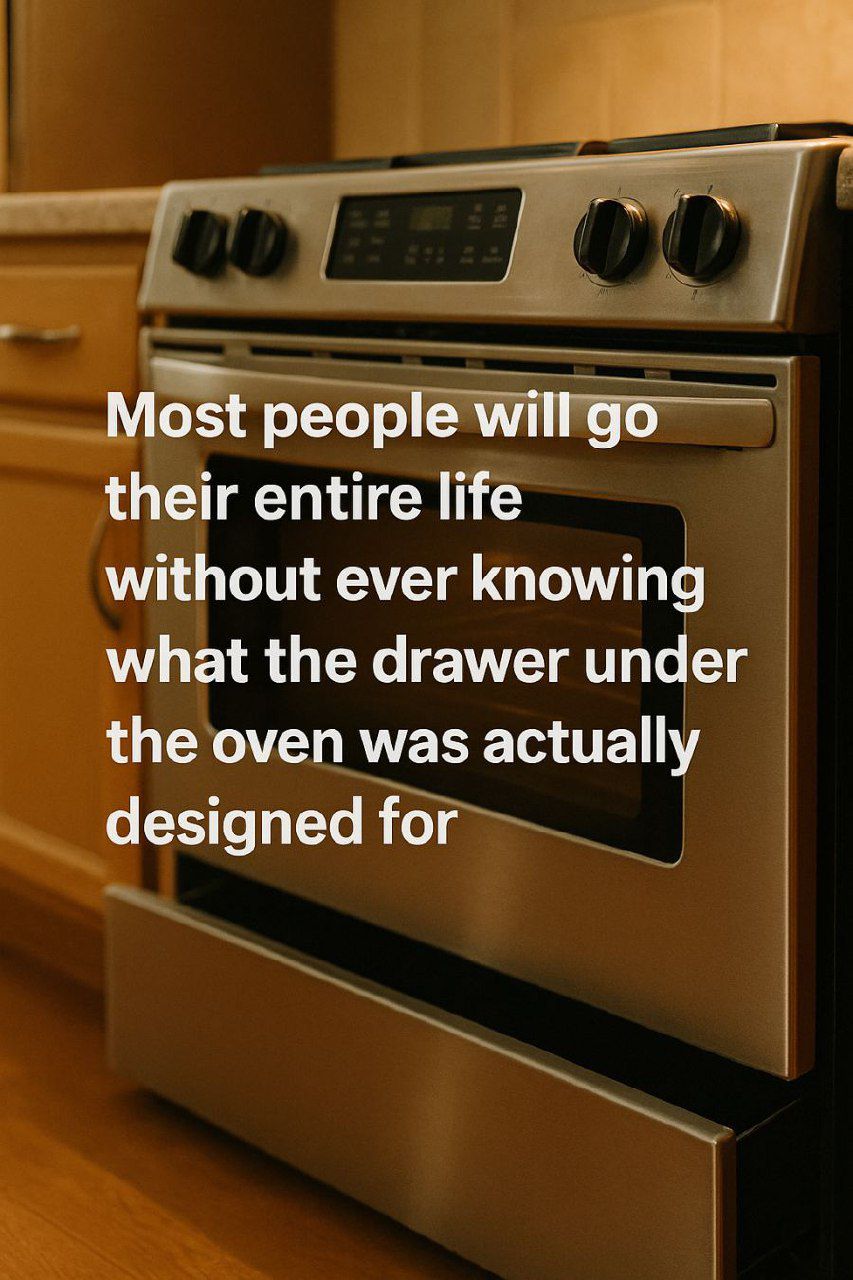
In many households, the kitchen serves as the center of everyday routines, yet one common feature is often misunderstood: the drawer beneath the oven. It’s frequently packed with baking trays, muffin tins, or spare pans, becoming a default storage space without much thought. Because it’s always been there, most people never stop to question its original purpose—or whether it’s being used correctly.
The truth is, that lower drawer isn’t the same in every oven. In many models, it was designed as a warming drawer, not a storage compartment. Its job is to keep cooked food at a low, consistent temperature while the rest of a meal is prepared. This gentle heat helps dishes stay warm without continuing to cook or drying out, making it especially useful when timing multiple dishes or hosting guests.
Confusion happens because some ovens do include true storage drawers, while others house heating elements below. The difference isn’t always obvious at a glance. A quick way to tell is to check your oven’s manual or look for temperature controls, vents, or labels near the drawer. If it warms up when the oven is on—or has its own heat setting—it’s not meant for cookware storage.
Using a warming drawer properly can make cooking smoother and safer. Storing pans or plastic items in a heated drawer can lead to damage or potential fire hazards. When used as intended, however, it helps preserve flavor, texture, and timing, allowing meals to come together with less stress. Understanding what that drawer is designed to do turns a long-overlooked feature into a practical tool—and makes your kitchen just a little smarter.