
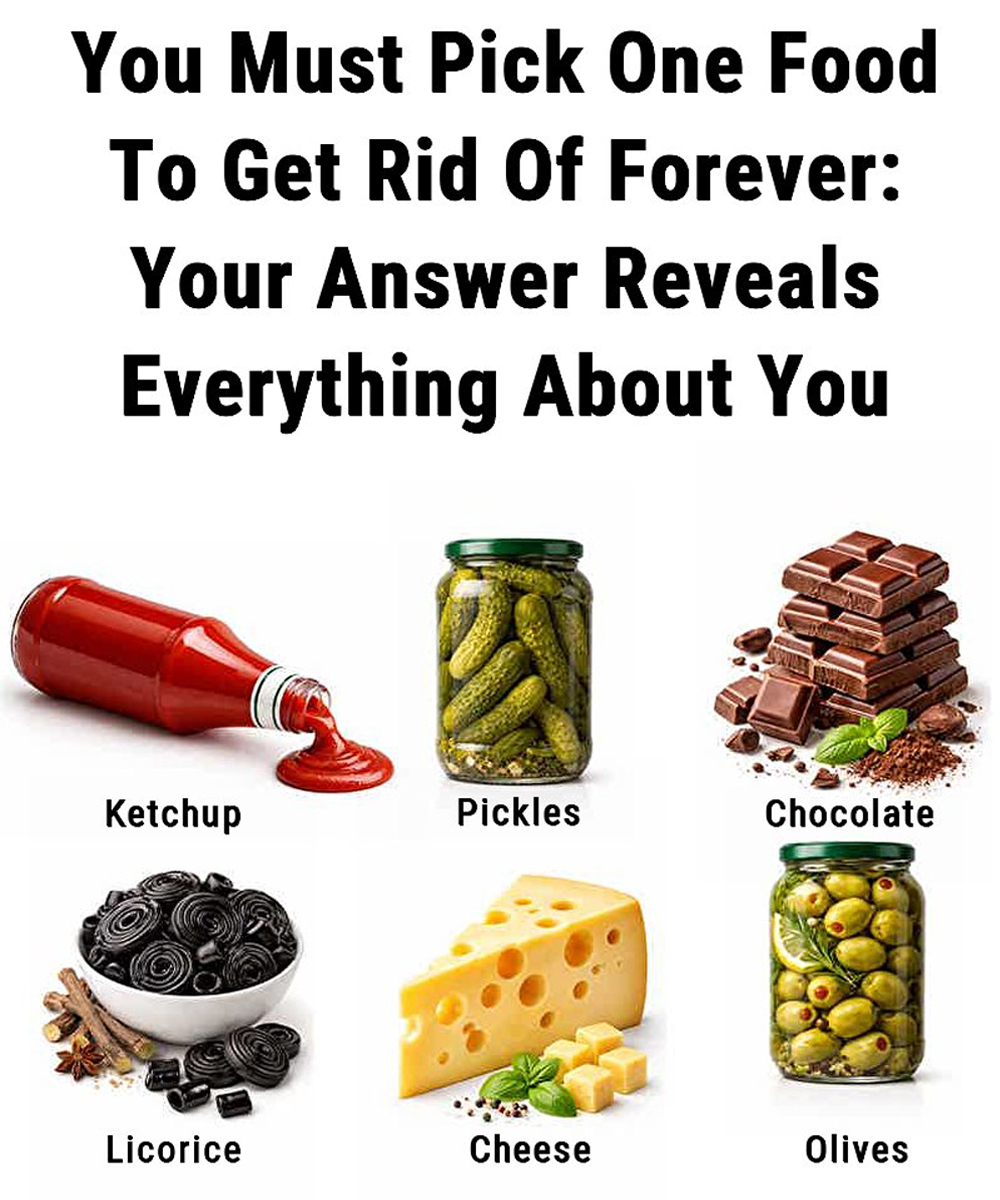
Imagine being asked to make a surprisingly tough choice: one food must disappear from your life forever. No exceptions, no nostalgia meals, no second chances. At first, it feels like a question of taste, but psychologists suggest our reactions to food are often tied to comfort, emotional habits, and identity. The item you’d let go of—and the one you’d fiercely protect—may quietly reflect how you navigate stress, pleasure, and attachment.
The key to this exercise is noticing your first instinct. Before logic steps in, your immediate reaction often says the most. Choosing to eliminate everyday staples like ketchup or pickles may point to adaptability, moderation, or a preference for calm and simplicity. Struggling to part with them, on the other hand, can reflect a deep appreciation for routine, familiarity, and the small comforts that make daily life feel steady and reassuring.
Foods tied closely to emotion—such as chocolate or cheese—often reveal how you handle stress and connection. Being willing to give them up may suggest self-discipline and emotional independence, while holding onto them can signal warmth, loyalty, and a strong bond to shared experiences. More polarizing choices like licorice or olives often highlight individuality: either a comfort with blending in or a confidence in embracing tastes that aren’t universally loved.
This isn’t about right or wrong answers. Instead, it’s a simple way to reflect on how personal history and emotion shape everyday decisions. The food you’d remove may hint at how you balance comfort and practicality, how you approach sacrifice, and what you value most in daily life. Sometimes, small choices offer the clearest glimpse into how we understand ourselves—one bite, or absence of it, at a time.