
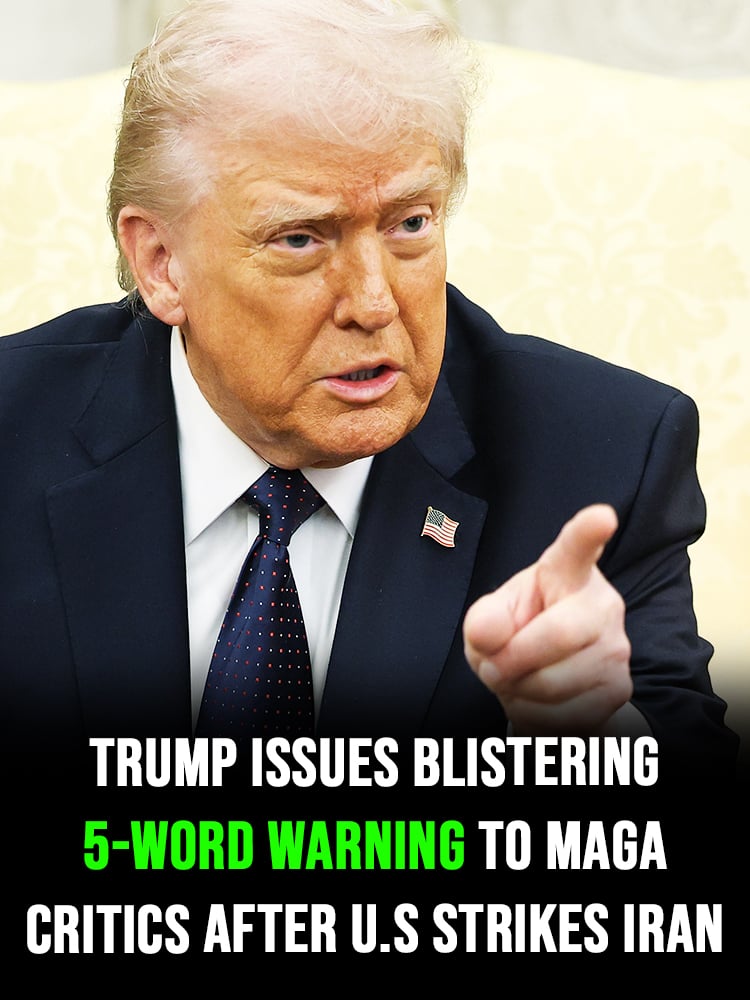
A recent military strike on Iran associated with former U.S. President Donald Trump has triggered intense debate across political circles, including within the coalition that has long supported his leadership. The development has not only heightened tensions in the Middle East but also exposed divisions among prominent voices aligned with the broader “America First” movement. Some influential commentators and political figures have publicly criticized the move, arguing that it appears to conflict with Trump’s earlier pledges to avoid new foreign conflicts and limit U.S. military involvement overseas.
Among those voicing concern were media personality Tucker Carlson, conservative commentators Hodge Twins, and U.S. Representative Marjorie Taylor Greene. Their criticisms circulated widely online and highlighted frustration among some supporters who had embraced Trump’s earlier messaging about avoiding prolonged overseas conflicts. For these critics, the strike raised questions about whether the action aligns with the non-interventionist tone that helped define the movement’s appeal.
Trump, however, has defended the decision strongly. In public remarks, he characterized the action as a necessary step to prevent Iran from advancing toward nuclear weapons capability. He suggested that the move should be viewed as a strategic measure rather than a shift away from his broader priorities. Trump also emphasized his belief that the political movement built around his leadership remains firmly behind him, stating that disagreements within the coalition are not unusual and often fade with time.
The situation now places both Trump and his supporters at a crossroads as debate continues over the role of U.S. military power abroad. Political analysts say the controversy highlights the delicate balance between national security decisions and campaign-era promises that resonate with voters. Whether the disagreement becomes a lasting fracture or a temporary dispute may depend on how events unfold in the region and how the broader political base ultimately interprets the decision.