
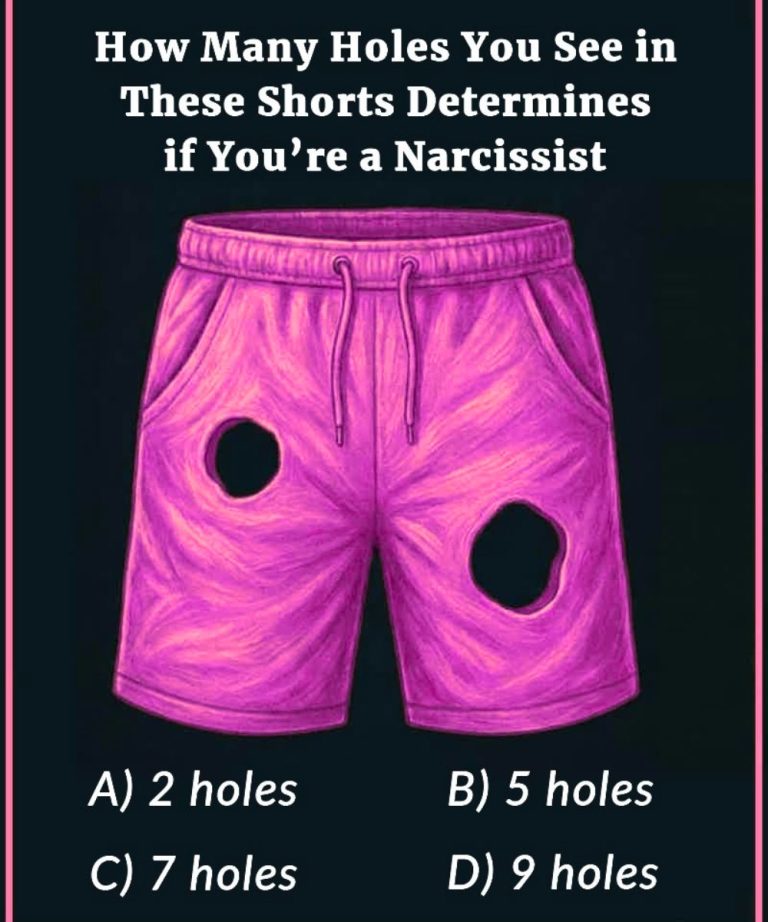
At first, the picture looks like nothing more than a beat-up pair of shorts — the kind you’d toss in a donate pile without a second thought. Then you see the attention-grabbing caption claiming that the number of holes you spot “reveals” something about your personality, and suddenly you’re zooming in like it’s a pop quiz. That whiplash from casual scrolling to intense inspection is exactly why the image keeps circulating. It’s not really about diagnosing anyone — it’s about how quickly our brains pick an answer and how confidently we defend what we think we see.
To do it properly, start by slowing down and treating it like a simple counting exercise. Most people immediately notice the two obvious rips on the legs and stop there, landing on 2 without hesitation. That’s the “first glance” answer: your eyes grab the loudest visual cues — the torn fabric — and your brain happily calls it done. It’s quick, tidy, and satisfying, which is why so many people feel certain about it within seconds.
Next, count the openings that are part of the shorts’ design — the ones that exist even if the fabric isn’t damaged. Add one waist opening at the top and two leg openings at the bottom, then include the two tears you spotted first. That brings the total to 5, which many viewers consider the most practical, real-world answer because it includes both the damage and the way clothing is constructed. If you want the easiest “how-to” rule here, it’s this: count every place an object can be passed through, whether it’s intentional (waist/legs) or accidental (rips).
Finally, if you’re feeling extra precise, consider depth and layers. If each rip goes through both the front and back fabric panels, some people count each tear as two separate holes, because there’s an entry point and an exit point. That’s how totals like 7 — or even higher counts in some explanations — enter the chat. The headline’s “narcissist” claim is just clickbait; this puzzle can’t label anyone’s personality. What it really highlights is thinking style: some people answer fast, some people think structurally, and others analyze in 3D. In the end, the number matters less than your reasoning — and that’s the real secret behind why the comments never stop.