
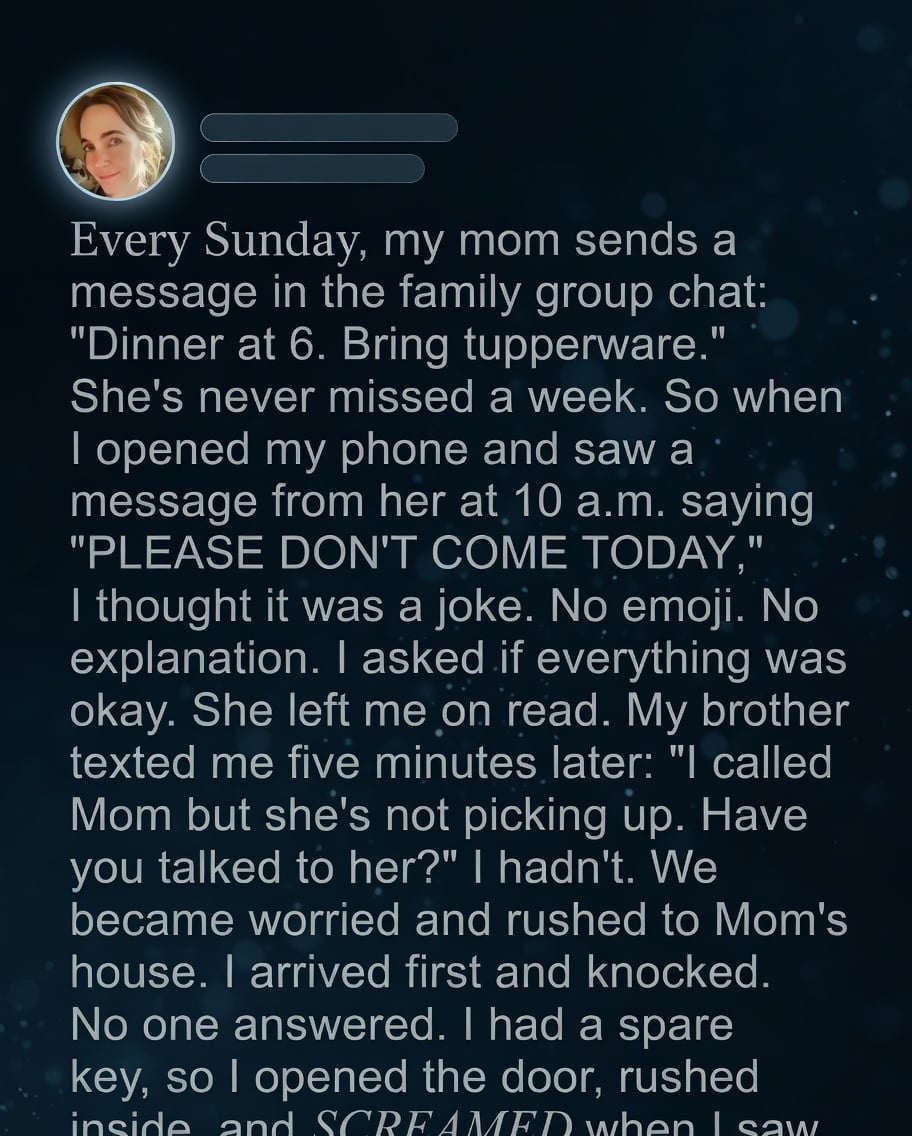
It wasn’t an emergency that changed things—it was something far quieter. A Sunday that simply didn’t unfold the way it always had. No carefully set table, no familiar routine carried out on autopilot. Instead, there was a pause. And in that pause, something long unspoken finally surfaced: the quiet exhaustion of always being the one who shows up, prepares, and holds everything together without question.
For years, those gatherings had looked like love in its most visible form—meals prepared, traditions maintained, expectations met. But beneath that consistency was a growing weight. What once felt meaningful had slowly become something to manage, something to get right. Admitting that out loud didn’t come easily. It felt, at first, like letting something important slip. But in truth, it was the first honest step toward change.
The shift began not with a grand decision, but with a simple conversation. Sitting together over an easy, unplanned meal, the kind that required no effort or performance, the pressure eased just enough to allow honesty in. Listening replaced assumption. And in that exchange, it became clear how easily care can turn into obligation when it goes unquestioned for too long.
From that moment forward, the meaning of Sunday changed. The ritual didn’t disappear—it evolved. It became something chosen, not expected. Flexible instead of fixed. And perhaps most importantly, it made space for rest without guilt. What remained wasn’t the routine itself, but the connection it was meant to support—now lighter, more real, and able to hold both joy and tiredness without compromise.