
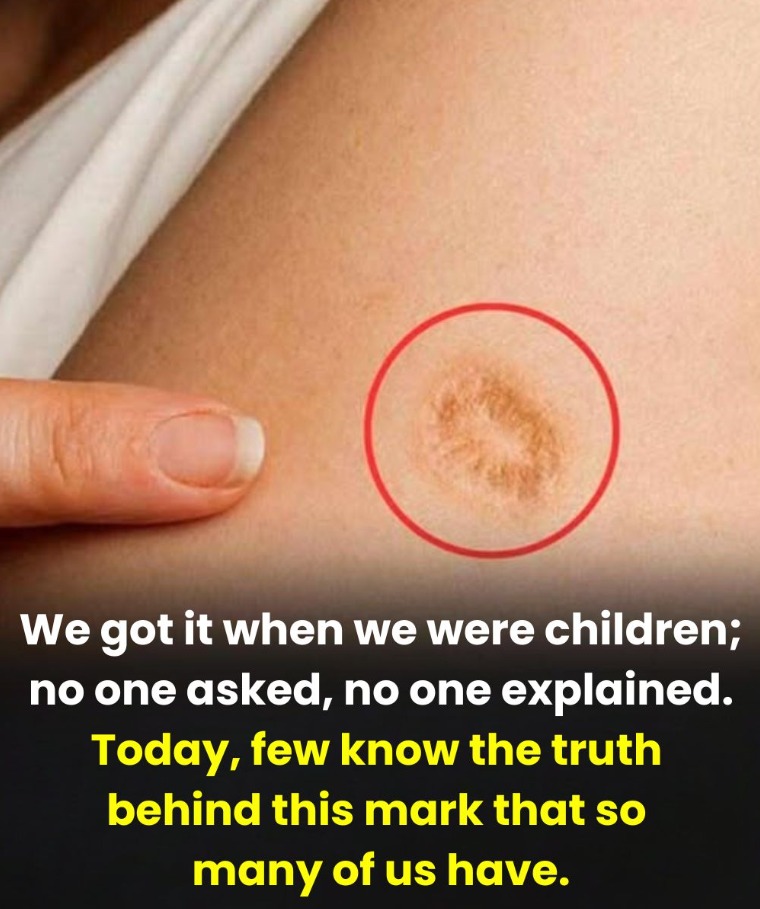
One of my earliest memories isn’t of a birthday or a holiday—it’s of a small scar on my mother’s upper arm. It rested high on her shoulder, visible when she wore short sleeves but easy to miss if you weren’t looking closely. There was something about its placement that felt almost deliberate, as though it existed in that quiet space between private and visible. As a child, I didn’t have the words to explain why it fascinated me, but I noticed it every time.
The shape was what held my attention. It wasn’t jagged or random like the scrapes kids collect on playgrounds. Instead, it formed a subtle pattern: a faint ring of tiny marks surrounding a slightly deeper indentation at the center. Even then, I sensed it wasn’t the result of a simple accident. It looked intentional—measured, almost symbolic. It felt less like an injury and more like a story etched into skin.
Children are drawn to details adults often overlook. A small imperfection can feel like a mystery waiting to be solved. I would glance at that scar and quietly imagine possibilities, trying to match its precision to some event dramatic enough to explain it. I never asked about it directly. Perhaps I assumed the answer would arrive on its own someday, or perhaps I sensed it belonged to a chapter written before I existed.
Looking back now, I realize what truly captured me wasn’t just the scar itself, but the awareness that every mark carries history. Some stories are spoken aloud; others rest quietly beneath the surface, revealed only in fragments. That small circle on her shoulder taught me an early lesson: even the faintest imprint can hold a depth we don’t yet understand.