
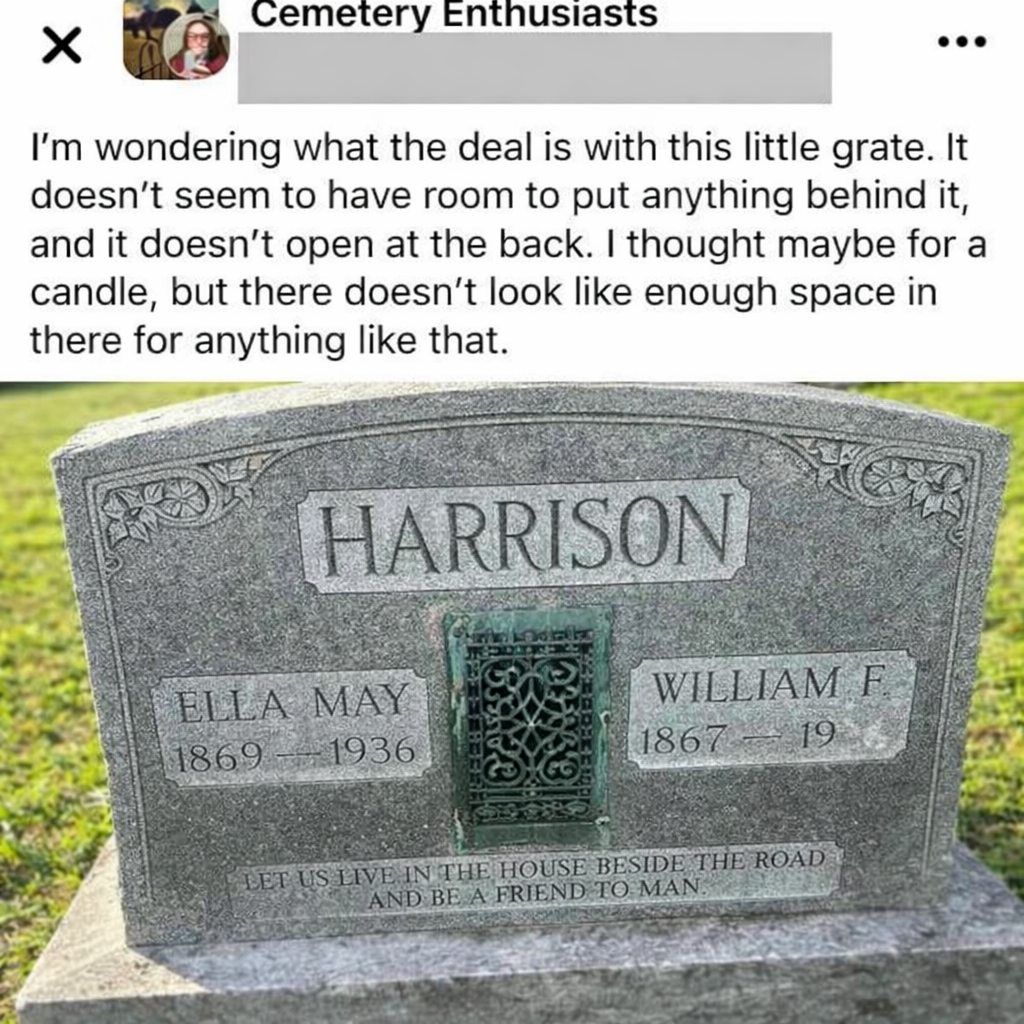
At first glance, a small cast-iron grate set into a cemetery marker may seem unexpected. Metalwork is not uncommon in memorial art, yet this particular detail stands out because it resembles the decorative floor vents found in many late 19th- and early 20th-century homes. These vents once allowed warm air to circulate through living spaces, quietly supporting daily comfort. Placed on a gravestone, the familiar shape suggests something deeply personal — perhaps a tribute to a beloved home or a life centered around warmth and hospitality.
The symbolism grows even richer when viewed through the lens of literature. The imagery echoes themes found in “The House by the Side of the Road” by Sam Walter Foss, a poem that honors kindness and openness. Just as heated air once flowed through ornate grates to warm a house, Foss’s verse speaks of generosity extending outward to others. Together, the visual and the poetic message form a tribute not just to a person’s life, but to the spirit they shared with those around them.
Historically, cast-iron grates were essential components of early heating systems, especially during a time when central heating was still evolving. Beyond their function, these pieces often featured intricate scrollwork and geometric patterns that reflected the craftsmanship of the era. Even everyday household fixtures were made with attention to beauty as well as practicality. Incorporating such a detail into a memorial design preserves a small fragment of that domestic artistry.
On a grave marker, the grate becomes more than a decorative element — it serves as a quiet metaphor. It suggests a threshold between past and present, between memory and legacy. The design can symbolize warmth that continues beyond a lifetime, reminding visitors of comfort once shared and connections that endure. In this subtle yet meaningful way, a simple architectural feature transforms into a timeless emblem of home, welcome, and lasting remembrance.