
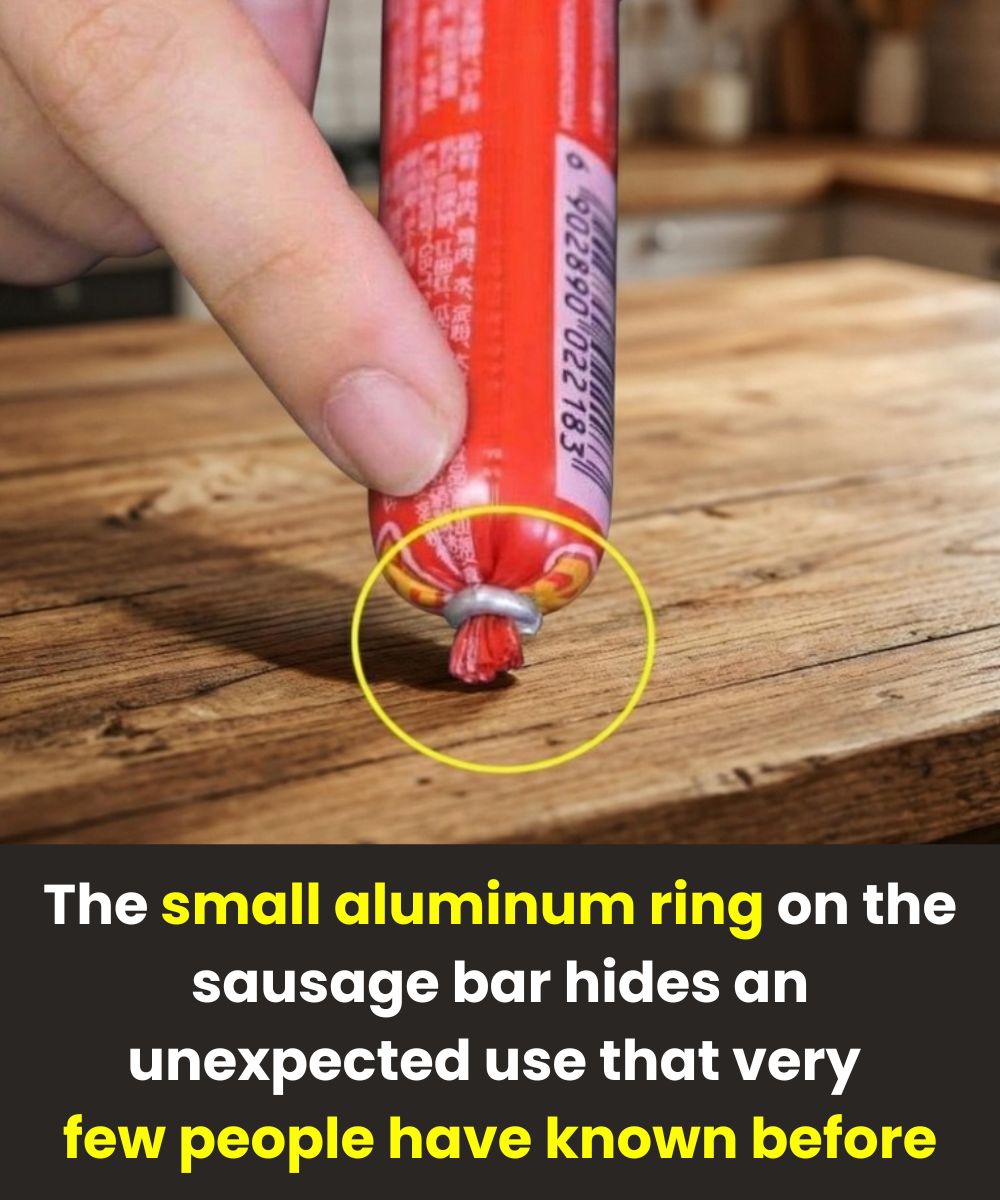
At first glance, the tiny aluminum ring attached to the end of many packaged sausage bars seems easy to overlook. Most people open the wrapper, enjoy the snack, and discard the small metal piece without a second thought. In everyday routines, such minor details rarely attract attention. Yet this small ring is far from accidental—it plays an important role in how certain food products are packaged and preserved.
Food packaging is carefully engineered to balance freshness, safety, and convenience. Even the smallest components are typically designed with a clear purpose in mind. The aluminum ring commonly found on sausage products illustrates how a simple feature can support multiple stages of a product’s journey, from factory production lines to storage on store shelves and finally to the consumer’s kitchen.
The ring, often called a crimp ring or closure ring, is primarily used to seal the end of the sausage casing. During manufacturing, seasoned ground meat is packed tightly into a casing made from natural or synthetic material. Once the casing is filled, the aluminum ring is pressed firmly around the end to close it. This process secures the contents and prevents the filling from shifting or leaking.
By holding the casing tightly shut, the ring helps maintain the sausage’s shape while limiting exposure to air and outside contaminants. This airtight seal contributes to longer shelf life and helps keep the product fresh during transportation and storage. Though it may seem like a minor detail, the small aluminum ring reflects the thoughtful design behind modern food packaging—proof that even the simplest elements often serve an essential function.