
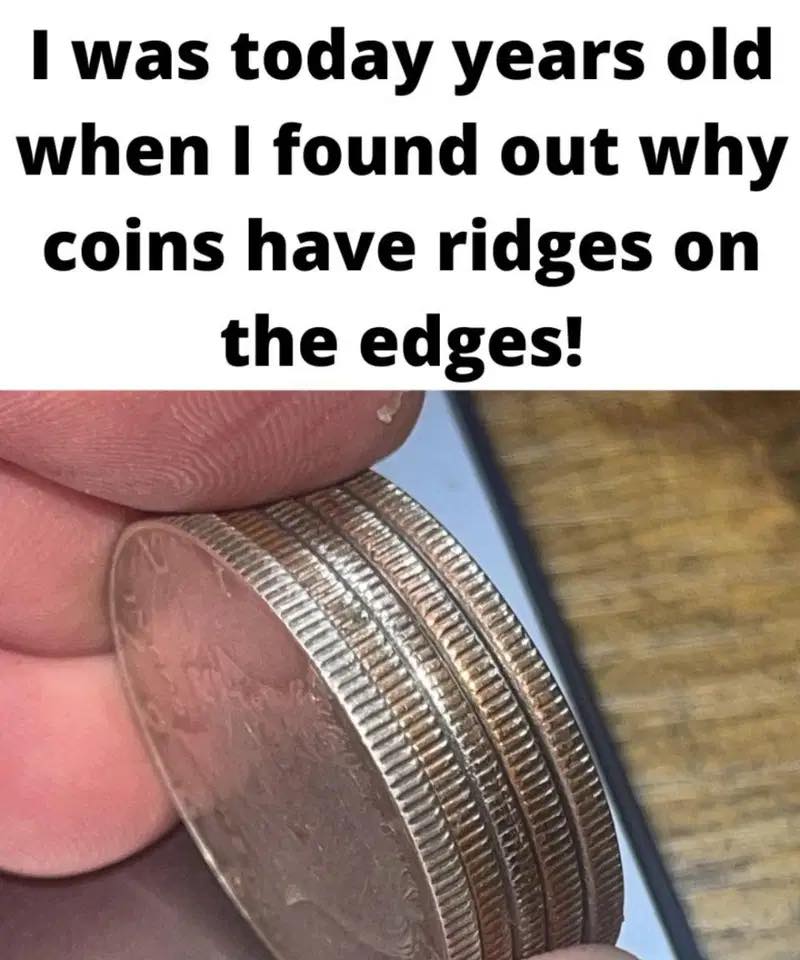
You’ve probably held one thousands of times — slipping it into parking meters, vending machines, or store counters. But have you ever really looked at a quarter? Run your thumb along its edge. Those tiny ridges — perfectly spaced and precise — aren’t just for decoration or grip. They’re a centuries-old security feature designed to protect currency and trust.
Long before modern minting machines, coins were made of real silver and gold. In those days, clever thieves discovered a profitable trick called coin clipping — shaving thin slivers of metal from the edges, collecting the shavings, melting them down, and spending the lighter coins at full value. The practice quietly drained wealth from treasuries and threatened entire economies.
The solution came from an unexpected source: Sir Isaac Newton. Appointed Warden of the Royal Mint in 1696, he introduced a revolutionary fix — reeded edges. By adding fine grooves along each coin’s rim, any clipping became instantly visible. A missing or uneven pattern revealed tampering, while intact ridges proved authenticity. It was one of the earliest examples of anti-fraud technology, centuries ahead of its time.
So next time you feel the edge of a quarter, you’re touching a legacy that began over 300 years ago — a clever design born of science, trust, and the fight against deception. Those ridges aren’t just texture; they’re a quiet symbol of how human ingenuity has always found ways to protect what matters most.