
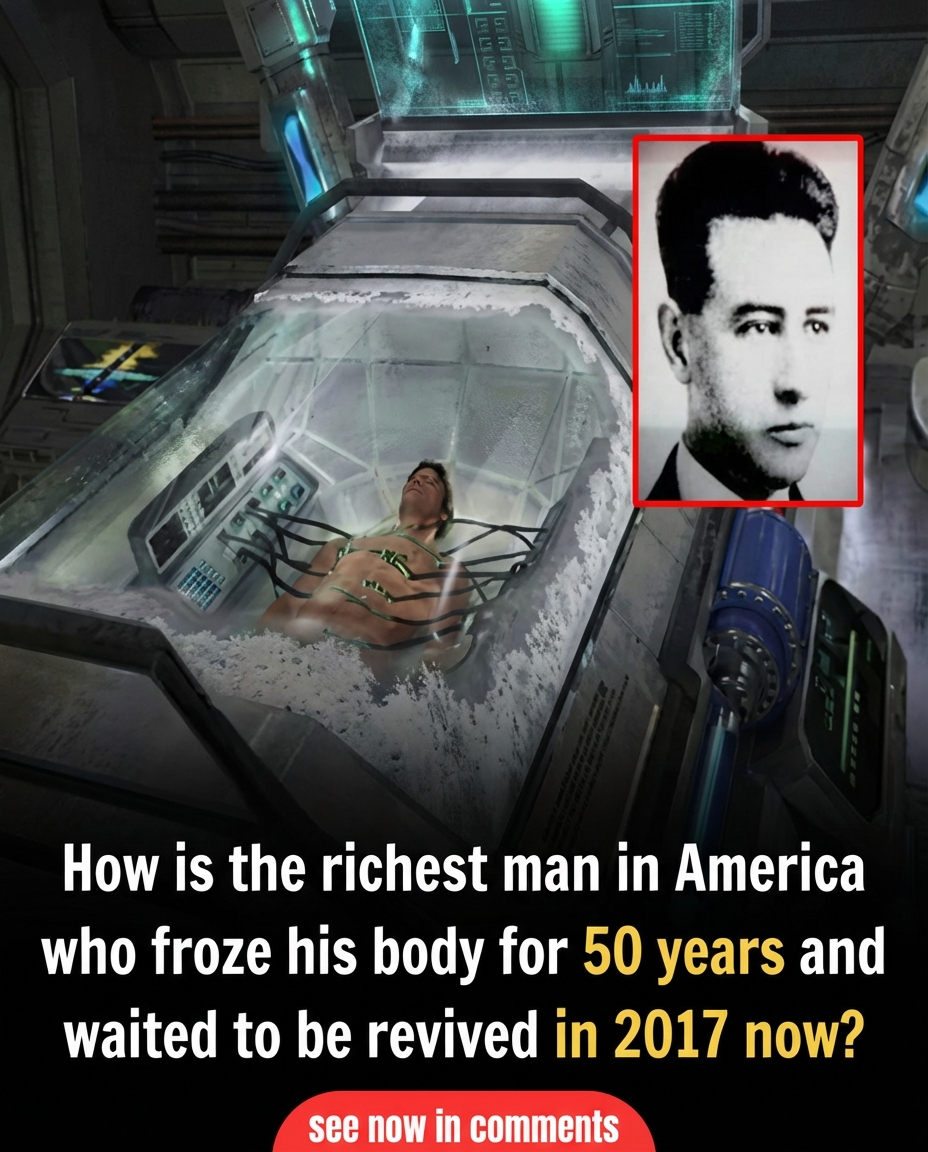
In 1967, psychology professor James Hiram Bedford made a decision that would place him in the history of scientific experimentation. A veteran of World War I and former University of California lecturer, Bedford was facing advanced kidney cancer that had spread to his lungs. During this difficult period, he encountered the ideas presented in Robert Ettinger’s influential book The Prospect of Immortality. Inspired by the possibility that future medical advances might one day overcome diseases that were fatal in his time, Bedford chose to have his body preserved through the experimental process known as cryonics.
On January 12, 1967, Bedford became the first person to undergo cryonic preservation after legal death. The preparation process involved removing blood from the body and introducing protective chemicals designed to reduce damage to tissues during freezing. After this procedure, his body was placed into a container filled with liquid nitrogen, where temperatures dropped to about −196°C. Bedford never expected an immediate revival; rather, he hoped that future generations might develop technologies capable of reversing disease and restoring life to preserved individuals.
Over the following decades, Bedford’s case became an important reference point in discussions about cryonics. Years later, specialists from Alcor Life Extension Foundation examined his preserved remains. According to reports from that examination, his body had remained in relatively stable condition given the early techniques used at the time. Observations suggested that many tissues had endured the long-term storage process better than some researchers initially expected, providing insights that influenced later preservation methods.
More than half a century after his preservation, Bedford remains stored in liquid nitrogen, representing one of the earliest and most famous examples of cryonics. While scientists continue to debate whether revival will ever be possible, his decision sparked decades of interest and discussion about the future of medicine and human longevity. Whether or not the technology he imagined ever becomes reality, Bedford’s choice helped launch a scientific conversation that continues to fascinate researchers and the public alike.