
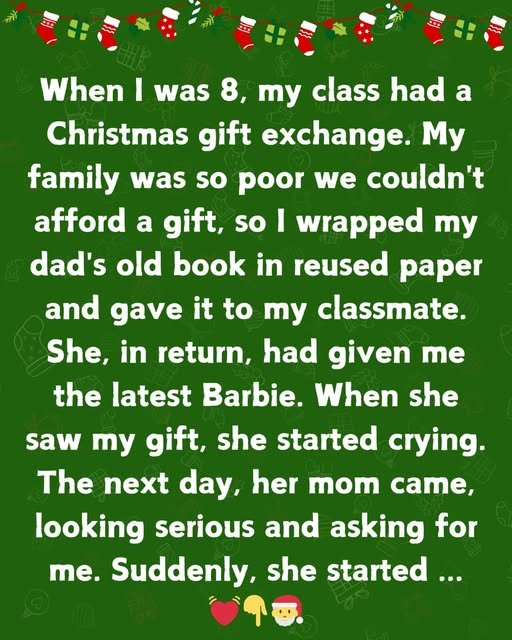
I was nine years old when I first discovered what people truly meant by “the magic of the season.” My family was struggling, and I often walked into school hoping no one would notice the little things I quietly went without. One December morning, a classmate brought her brand-new Barbie doll to class. I adored dolls, though I didn’t have any toys of my own, so I admired hers from a distance. She misunderstood my quiet interest and grew upset, thinking I wanted to take it. She left school in tears, and even though I hadn’t touched her doll, I felt terrible.
The next day, her mother arrived at the classroom with a serious expression and asked to speak with me. My heart pounded as I stepped forward, expecting scolding or blame. But the moment our eyes met, her expression softened. She offered a warm smile and handed me a bag filled with gifts: a Ken doll, a Barbie car, and holiday outfits still crisp in their packaging. I stood there speechless. No one outside my family had ever given me a present before, and certainly not so many.
Her generosity didn’t end with the gifts. She invited me to join her and her daughter for lunch after school — something I had never experienced. I had never been inside a restaurant before. Her daughter, no longer upset, welcomed me with kindness, and from that day forward, we became close friends. What began as a misunderstanding transformed into one of the most meaningful friendships of my childhood.
Even now, at twenty-four, living in different towns, we still keep in touch. That moment of unexpected generosity shaped how I understood compassion, empathy, and the meaning of the holidays. As my family eventually found stability, I made a promise to myself: every year, I would give back to a child in need. It’s my way of carrying forward the kindness that once made a little girl feel seen, valued, and forever changed.