
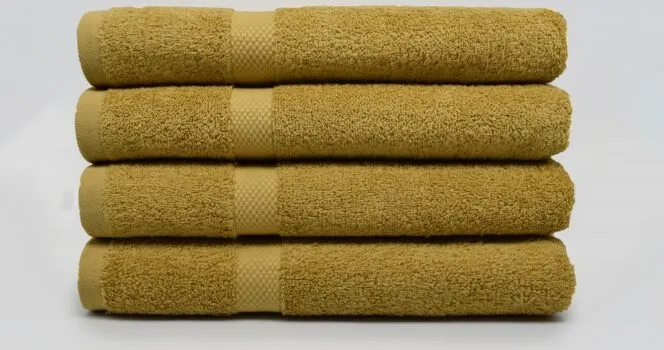
It started as a lighthearted online debate: why do towels have those neat horizontal stripes near the edges? Social media quickly filled with creative guesses — some said they were “face and body dividers,” while others dubbed them “racing stripes” to help towels dry faster. The jokes spread quickly, but the real explanation turned out to be far more practical — and a little bit genius.
Those stripes are known as dobby borders, and they serve an essential function beyond decoration. Textile manufacturers design these sections with a tighter, more durable weave that helps towels resist fraying after countless trips through the washer and dryer. Because towels are washed frequently, their fibers naturally loosen over time. The dobby border reinforces the edges, keeping the towel balanced in structure and preventing it from stretching or unraveling while maintaining softness and absorbency.
There’s beauty in the function, too. The dobby border gives towels a clean, finished appearance that adds to their visual appeal, especially when folded or hung. The straight lines also act as subtle folding guides — ensuring your bathroom linens look as neat and uniform as those in a luxury hotel. This combination of utility and design makes the dobby border a quiet example of how craftsmanship meets everyday convenience.
So the next time you reach for a towel, take a closer look at those understated lines. They’re not just decorative accents — they’re a testament to thoughtful design and durability woven into something we use every day. Sometimes, it’s the smallest details that reveal how much care and engineering go into making our daily routines a little more comfortable and refined.