
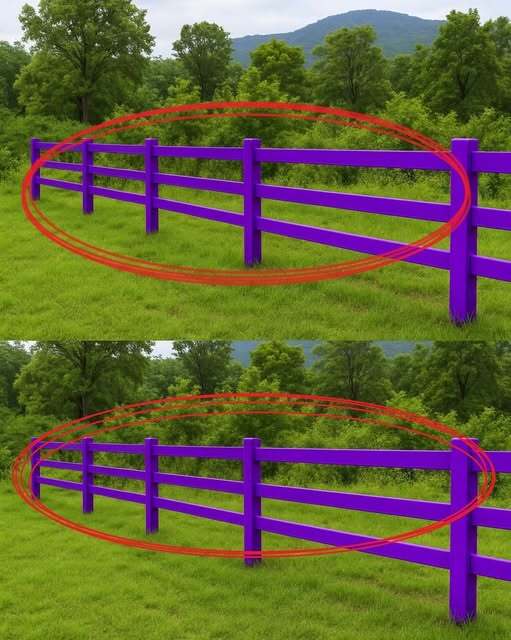
While hiking trails, country roads, or rural neighborhoods, you may occasionally spot a fence marked with a bold purple stripe or painted section. At first glance, it can look like a creative or decorative choice. In reality, this color is rarely about style. A purple-painted fence is meant to send a clear, practical message—one rooted in property rights and personal safety rather than aesthetics.
In several U.S. states, purple paint serves as a legally recognized alternative to traditional “No Trespassing” signs. Landowners use it to indicate that entry is not permitted without permission. The idea behind the color choice is simple: purple stands out in natural environments and remains visible longer than paper or metal signs, which can fade, fall, or be removed. Where these laws apply, ignoring the marking can carry the same legal consequences as ignoring a posted sign.
The use of purple paint is especially common in rural areas where large properties, wooded land, or farmland make signage impractical. Paint doesn’t require constant replacement and is less likely to be tampered with. This system also benefits property owners by providing a consistent, recognizable warning that doesn’t rely on language, making it easier for hikers, hunters, and passersby to understand boundaries at a glance.
For anyone who enjoys spending time outdoors, recognizing a purple fence or post is an important part of respectful exploration. It’s a signal to stop, turn back, or seek permission before proceeding. What may look like a splash of color is actually a quiet form of communication—one that helps balance private property rights with shared outdoor spaces. Knowing what it means allows everyone to navigate the landscape more safely and responsibly.