
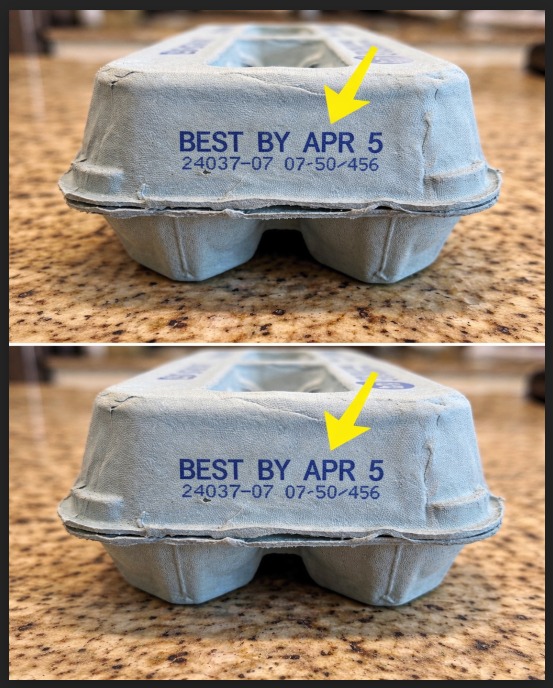
I didn’t fully understand egg freshness until one ordinary morning revealed a small but powerful detail: the Julian date printed on the carton marks the day the eggs were packed, offering a clearer indicator of freshness than the familiar “sell by” label. That three-digit number—ranging from 001 for January 1 to 365 for December 31—quickly reframed how I shop. Eggs can still be within their sale window yet no longer at their peak, and recognizing that distinction brings both reassurance and awareness to a routine purchase.
Now, each carton feels less like a grab-and-go item and more like a quiet story waiting to be read. A quick scan of the Julian code helps identify recently packed eggs, while the plant number reveals where they were processed—an unexpected detail that adds a sense of traceability in today’s large-scale food system. Even grading takes on new meaning; labels such as Grade AA or Grade A can guide you toward eggs that perform best for specific cooking styles, from neatly fried whites to fluffy scrambles.
Common packaging terms also become more informative when viewed with curiosity. Descriptions like “cage-free,” “free-range,” or “pasture-raised” offer insight into production approaches and allow shoppers to align purchases with personal preferences. Rather than marketing noise, these details can serve as helpful cues when deciding what quality means for your kitchen.
What’s most surprising is how empowering these small numbers and labels can feel. Understanding them doesn’t complicate shopping—it simplifies it, turning an everyday choice into a confident one. The next time you reach for a carton, take a moment to read what’s printed there. With a little knowledge, the ordinary act of buying eggs becomes intentional, and your breakfast begins with clarity long before it reaches the pan.