
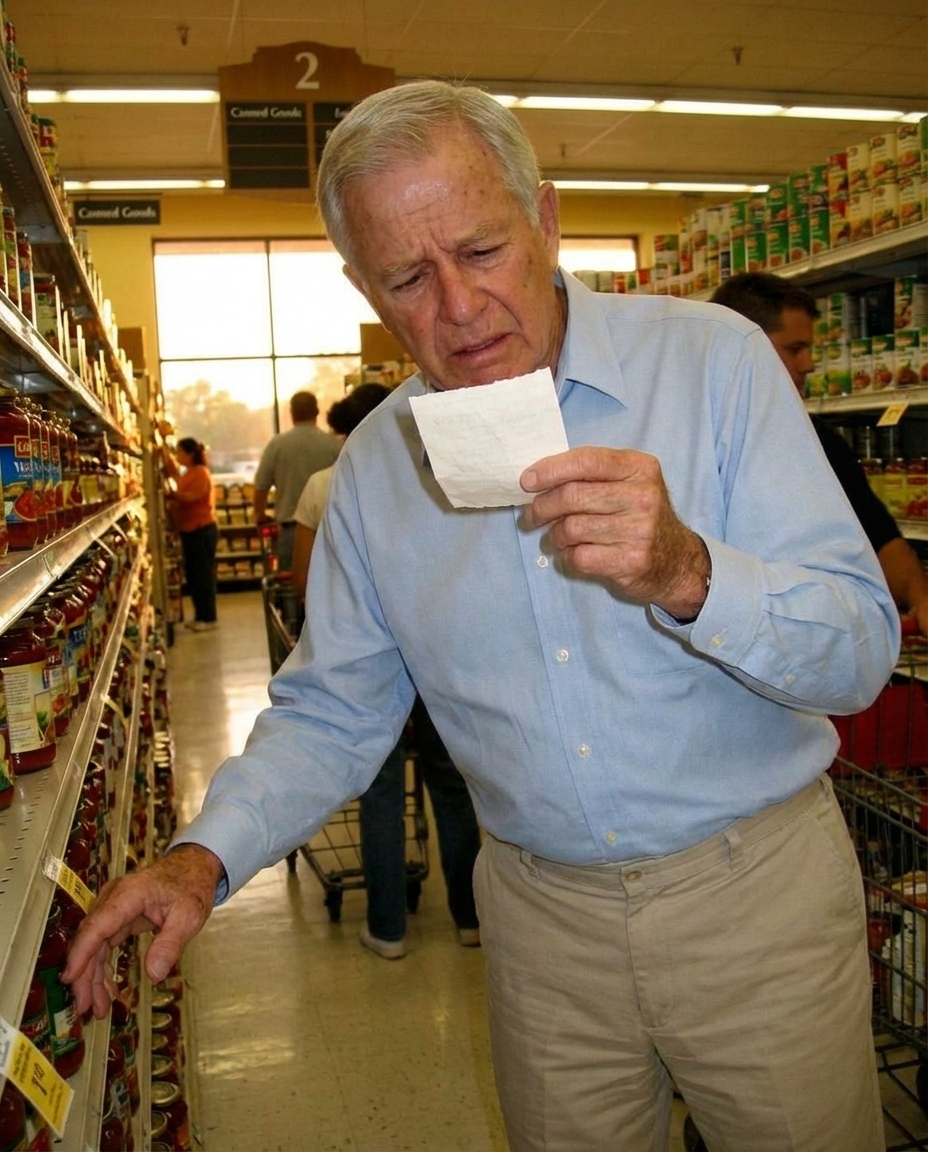
I noticed him the second I entered the aisle: an elderly man, neatly dressed, standing still while the rest of the store rushed around him. Shoppers moved past without a glance, carts bumped by, and no one seemed to realize that his pause was about more than forgetting an item. There was something in his face that felt heavier than ordinary confusion. When I stepped closer, he showed me a handwritten shopping list his late wife used to make for their Sunday meals. He told me he wanted to cook what they always used to share, hoping the familiar routine might bring back a little comfort. I thought I was helping him find ingredients, but the moment quickly became something far more meaningful.
As we made our way through the store, he began talking about his wife with the kind of tenderness that only comes from years of shared life. His memories were full of affection, yet there was also a fragility in the way he kept losing his place and forgetting what came next. I gently guided him through the list, recognizing that he was carrying more than sadness. His stories painted a picture of a long marriage built on rituals, small habits, and dependable love. It became clear that this shopping trip was not really about preparing a meal. It was about preserving a connection to the life he had known and trying, for just a little while, to feel close to it again.
Out in the parking lot, everything shifted. When I picked up the list he had dropped, I noticed faint impressions pressed into the paper, like a hidden message left behind from another page. He held it to the light, and his expression changed almost instantly. The words suggested that his wife had quietly worked with their daughter to make arrangements for his future care, planning ahead for a time when she would no longer be able to help him herself. To him, the discovery felt deeply painful, almost like a secret kept behind his back. But from another angle, it looked like something else entirely: one last act of love from someone trying to protect the person she knew she would one day have to leave.
That discovery led to a difficult but necessary conversation with his daughter, one that may never have happened without that unexpected moment in the store. Together, we began talking honestly about care, independence, dignity, and what support could look like without taking away his sense of self. Nothing changed all at once, and there was no perfect ending waiting on the other side of that conversation. But something more important began to happen—they started facing the truth together instead of separately. It was a reminder that even the smallest gestures, like helping someone shop for groceries, can open the door to healing, honesty, and life-changing compassion.