
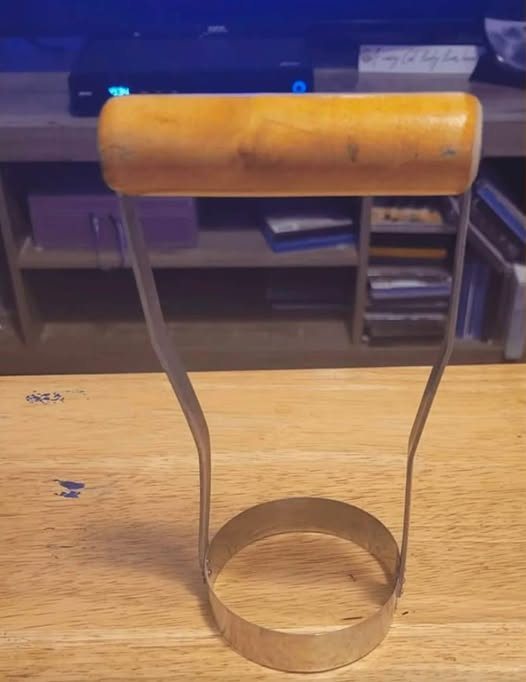
Long before electric gadgets filled kitchen counters, the Kwik-Kut Deluxe Food Chopper transformed everyday cooking with a simple hand-crank design. Introduced in the United States in the early 1900s, this compact tool quickly earned a place in countless homes. For busy cooks, it offered something revolutionary for its time: a faster, easier way to chop vegetables, fruits, and nuts without relying on skill-heavy knife work. Its appeal lay in practicality, turning tedious prep into a smooth, almost satisfying task.
The design was refreshingly straightforward. A sturdy metal cylinder housed a rotating blade wheel, and ingredients were fed inside before a quick turn of the crank did the rest. With each rotation, food was chopped into consistent, uniform pieces. There were no cords, no motors, and very few parts—making the Kwik-Kut both dependable and easy to clean. This simplicity resonated with generations of home cooks who valued tools that worked well without unnecessary complexity.
As kitchens and tastes evolved, so did the chopper. In the 1930s, manufacturers introduced a wider base and longer handle to improve stability and leverage. By the 1950s, updates included a slimmer profile and plastic handle, giving it a more modern look while preserving its core function. These thoughtful refinements helped the Kwik-Kut remain relevant even as new kitchen innovations emerged.
Eventually, electric food processors and modern appliances pushed hand-crank tools out of the spotlight. Today, the Kwik-Kut Deluxe is rarely found in stores, but it hasn’t disappeared entirely. Some families still rely on original models for daily cooking, while others cherish them as durable heirlooms. Whether still in use or displayed with pride, the Kwik-Kut stands as a reminder that good design doesn’t age easily—and that sometimes, the simplest tools leave the longest legacy.