
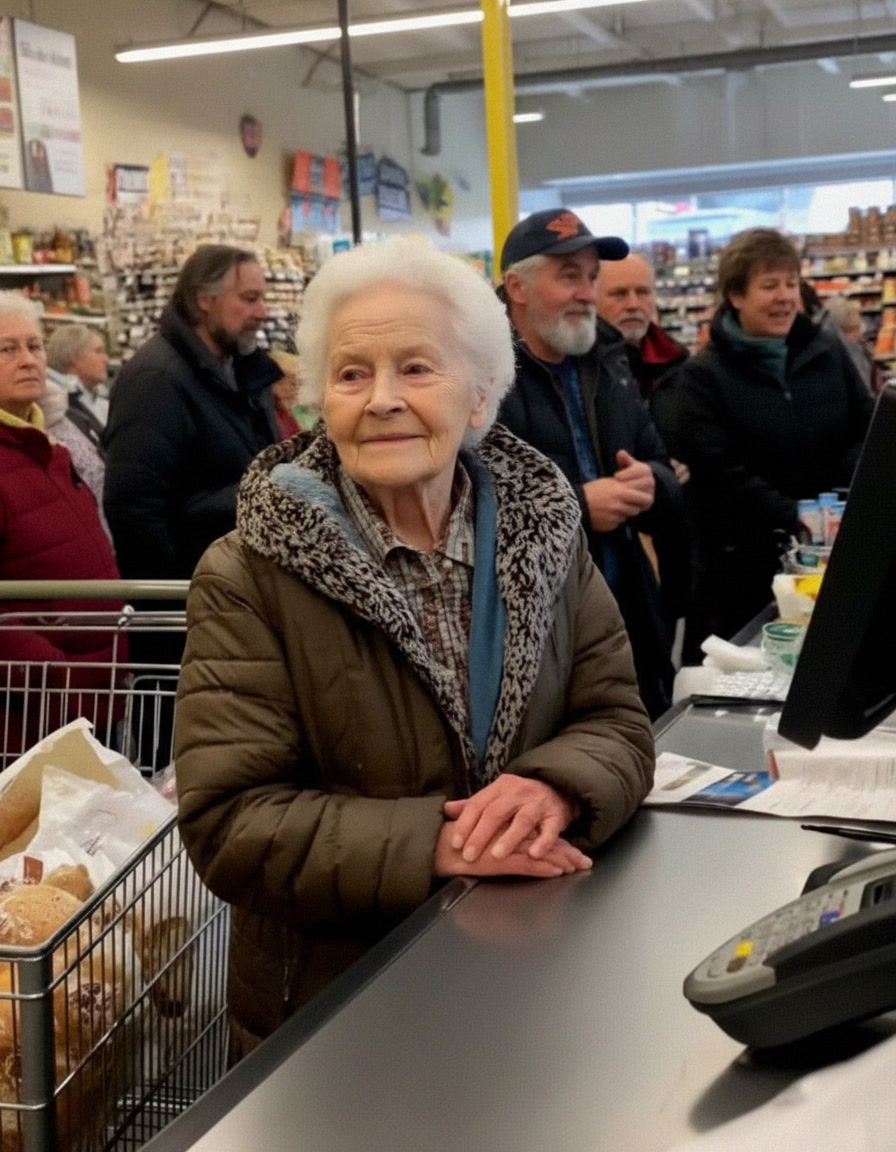
Two days before payday, with only twenty-seven dollars in my account and my toddler balanced on my hip, I stood in the grocery line silently hoping the total wouldn’t tip us into overdraft. Owen was mesmerized by the candy shelf, and I was doing mental gymnastics to make sure we could stretch what little we had. That’s when I noticed the elderly woman ahead of us. Her cart held only essentials — bread, milk, potatoes, soup, and a small apple pie that looked like her one indulgence. When her card declined twice and the murmurs behind us grew sharper, she whispered that she’d put the pie back. Before I could talk myself out of it, I stepped forward, tapped my card, and covered her bill. She looked at me as if I’d lifted a weight off her shoulders, and Owen waved goodbye with a cheerful “Bye-bye, Grandma!” I thought that would be the quiet end to a simple good deed.
Two days later, walking into the same store, I stopped cold. On the community bulletin board was a security-camera snapshot of me holding Owen, taped above a handwritten note: “Please call me. You helped my mom, and we want to thank you.” Embarrassment washed over me — what had felt private and personal was suddenly pinned up for strangers to see. I asked the manager to take it down and brought it home, staring at it for hours before finally dialing the number. The man who answered, John, softened as soon as he realized who I was. He explained that his mother, Margaret, wasn’t struggling financially, just easily flustered and deeply hurt by the comments made that day. He asked if I would meet them so she could thank me properly, and something in his voice — gentle, hopeful — made me agree.
We met at a cozy café filled with the smell of cinnamon and fresh bread. Margaret arrived in the same cardigan she’d worn at the store, but this time her smile was warm and confident. She hugged me tightly, doted on Owen while he devoured a muffin, and thanked me for offering kindness when others had chosen criticism. Then, with tears in her eyes, she said that Owen calling her “Grandma” had touched her deeply — so deeply that she wanted to invest in his future. She asked to open a savings account in his name and start it with ten thousand dollars, insisting it wasn’t charity but gratitude. I tried to protest, but her resolve was steady and kind. I sat there crying into my coffee as Owen swung his legs beside me, unaware that his life had just changed.
What started as a thank-you meeting grew into dinners, long walks, and conversations that felt like opening windows in a long-closed room. John and I discovered familiar losses in each other — partners who’d walked away, nights spent rebuilding what was broken, the determination to give our children the love we didn’t receive. Owen adored him instantly, and watching them together softened pieces of me I thought were beyond repair. Margaret quickly became “Grandma Margaret,” always cooking enough for all of us and cheering on every small victory. A year after that moment in the checkout line, John and I married beneath the oak tree in her backyard, and Owen walked down the aisle with the rings he couldn’t stop showing off. A few months later, John legally adopted him. Now, whenever Owen asks, “Mom, remember when we met Grandma Margaret at the store?” I smile and say, “Of course I do.” Because that day, I didn’t just pay for a stranger’s groceries — I stepped into the beginning of a family I never saw coming.