
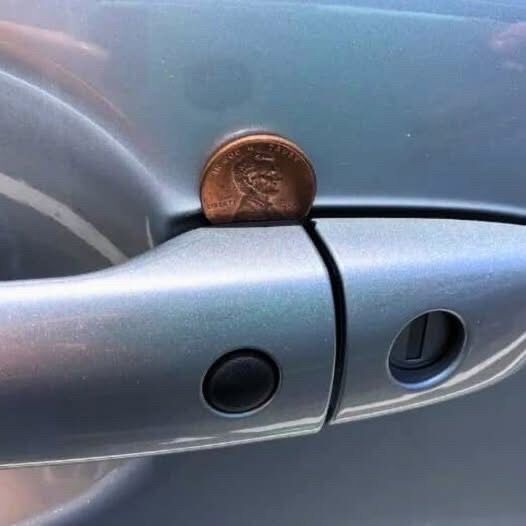
It often starts in the most ordinary way. You walk up to your car, keys in hand, mind already moving on to the next errand. The motion is automatic—until it isn’t. The door handle feels stiff, or the lock doesn’t respond as it should. At first, it seems like nothing more than a brief annoyance, the kind you expect to resolve in seconds.
Then you notice it: a small coin lodged where it clearly doesn’t belong. This moment is often linked to the long-circulating story known as the “penny trick,” which claims a coin placed in a door handle can prevent a car from locking properly. While experts point out there’s little evidence this method is commonly used or reliable, the idea has endured because it sounds simple and believable. Its persistence says more about human psychology than about actual risk.
What these stories really highlight isn’t the object itself, but how easily routine can override awareness. Small, unexpected disruptions—especially when we’re rushed or distracted—can narrow attention just enough to make us less observant of our surroundings. Irritation or confusion can momentarily take focus away from what’s happening around us, and that lapse is the real concern.
Finding something unusual on your vehicle doesn’t automatically mean danger. Objects can end up in odd places for harmless reasons. The most useful response is simple: pause, stay calm, and observe. Take a moment to look around, remove the object if it’s safe to do so, and trust awareness over assumption. Staying attentive without panic turns everyday interruptions into opportunities for informed, confident decision-making.