
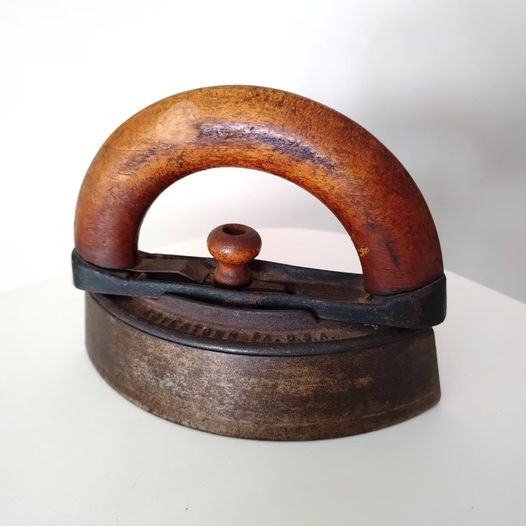
Long before sleek electric irons became a household staple, families relied on a surprisingly inventive tool to keep their clothing neat—the charcoal iron. What looks like a simple antique today was once a breakthrough in garment care, using burning charcoal as its internal heat source. Exploring its history offers a glimpse into the resourcefulness of earlier generations and the clever engineering behind the tools that shaped everyday life.
To understand how revolutionary the charcoal iron was, it helps to look at what came before it. Early ironing methods included heating metal plates over open flames or using heavy objects to smooth fabrics—processes that demanded constant reheating and considerable effort. The charcoal iron introduced something new: a built-in chamber that held glowing embers, providing steady warmth for longer periods. This consistent heat made ironing faster, smoother, and far less labor-intensive, marking a major shift in domestic work.
Using the charcoal iron was a surprisingly thoughtful process. Users would lift the lid, place lit charcoal inside, and allow the hollow design to distribute heat evenly to the metal base. A wooden handle made it possible to work safely without burning one’s hands, and small ventilation holes ensured that the charcoal continued to smolder at a controlled temperature. These simple yet effective mechanics demonstrated a remarkable blend of practicality and craftsmanship.
For households around the world, the charcoal iron became more than a tool—it became a symbol of improved efficiency and the evolution of home care. It offered better pressing results, reduced physical strain, and quickly gained global popularity as people embraced a more reliable method of maintaining clothing. Though modern appliances have replaced it, the charcoal iron remains an important reminder of how innovation begins with everyday needs and evolves into the conveniences we rely on today.