
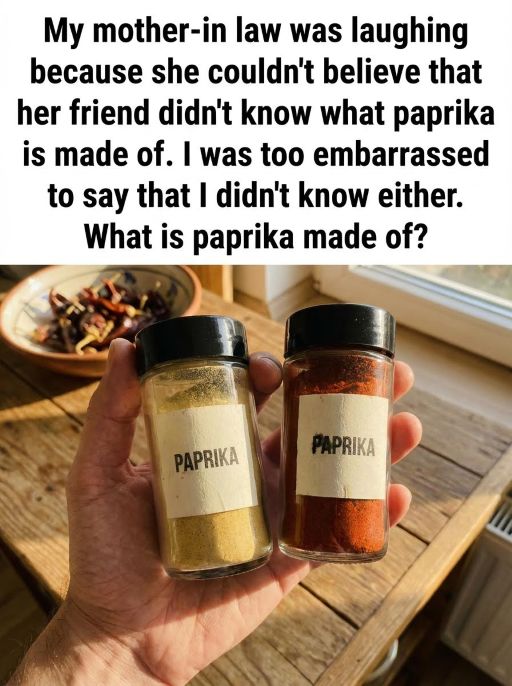
Paprika may seem like a quiet background player in the kitchen, adding warmth and color without drawing much attention to itself. Yet many people are genuinely surprised to learn what it actually is. Despite its deep red tone and distinctive flavor, paprika isn’t a complex blend or an exotic spice from a far-off plant. It’s made from red peppers—plain and simple. That realization often sparks a moment of curiosity, prompting cooks to look more closely at the everyday ingredients they use almost automatically.
The mystery around paprika says a lot about how removed modern cooking can feel from where food begins. When spices come sealed in tidy jars, it’s easy to forget they were once fresh, growing crops. Paprika starts with fully ripened red peppers, usually sweet or mildly flavored rather than spicy. The variety of pepper and the way it’s handled after harvest shape the final result. Some paprikas are soft and sweet, others earthy or smoky, but they all share the same foundation: mature red peppers.
Making paprika is less about complexity and more about time and care. Peppers are left to ripen fully so their color and natural sugars develop. They’re then dried thoroughly, either in the open air or in controlled drying spaces, until all moisture is gone. Once dried, the peppers are ground into a fine powder, sometimes with seeds removed to refine the flavor. Because fresh peppers are mostly water, a large quantity is needed to produce even a small amount of paprika, which explains its intense color and concentrated taste.
Understanding where paprika comes from can quietly change how it’s used in the kitchen. It stops feeling like an abstract spice and starts to resemble what it really is—a preserved vegetable in powdered form. That shift can make cooking feel more intuitive and connected to real ingredients. It also highlights the importance of freshness, since paprika loses flavor and vibrancy over time. Replacing it regularly keeps dishes brighter and more flavorful. In the end, paprika’s appeal lies in its simplicity, reminding us that many familiar ingredients have surprisingly straightforward beginnings.