
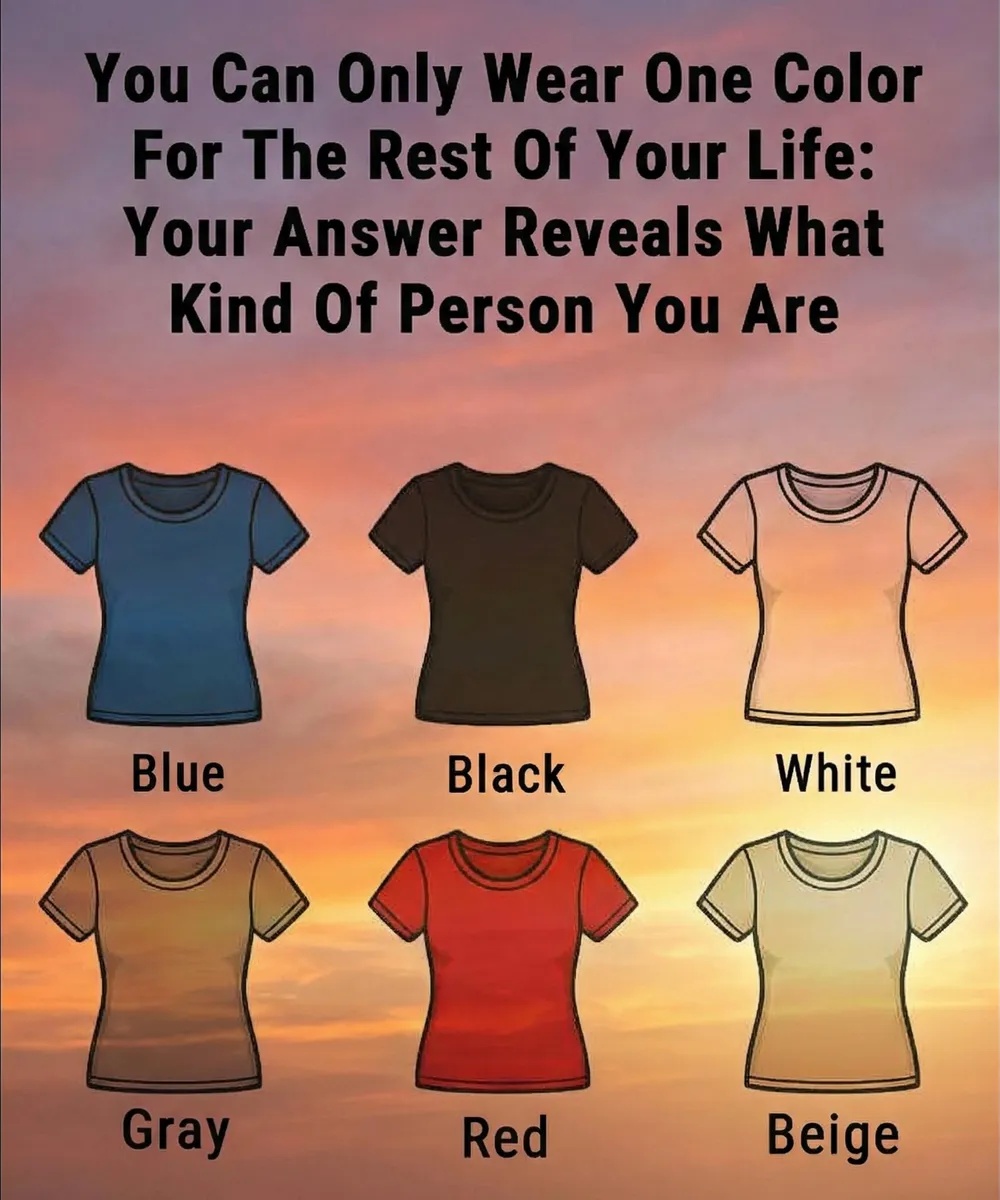
Imagine opening your closet and discovering that every piece of clothing you’ll ever own shares the exact same color. No prints, no seasonal shifts, no experimenting—just one shade, chosen once and worn for life. While it might sound limiting at first, the idea quickly turns inward. Picking a single color isn’t really about fashion; it’s about comfort, identity, and how you like to move through the world. Stripped of trends and options, that one choice becomes surprisingly personal.
Now picture being offered just six colors to choose from: blue, black, white, gray, red, or beige. Each carries its own quiet symbolism. Blue often reflects a desire for calm, trust, and emotional steadiness, appealing to those who value balance and reliability. Black tends to signal confidence and self-possession, favored by people who appreciate structure, clarity, and a strong sense of independence.
White suggests simplicity and openness, often resonating with people drawn to honesty, renewal, and uncluttered living. Gray leans toward practicality and emotional neutrality, fitting those who prefer moderation and thoughtful choices over extremes. Red stands out as the boldest option, linked to passion, drive, and intensity, while beige offers warmth and subtlety, commonly chosen by those who value comfort, authenticity, and a grounded lifestyle.
In the end, this thought experiment has little to do with clothes and everything to do with self-awareness. When variety is taken away, color becomes a quiet reflection of what feels safe, energizing, or reassuring. Whether someone leans toward bold tones or neutral shades, the choice hints at how they seek balance, express confidence, or create calm in daily life. Choosing one color forever wouldn’t just define a wardrobe—it would quietly reveal a mindset.