
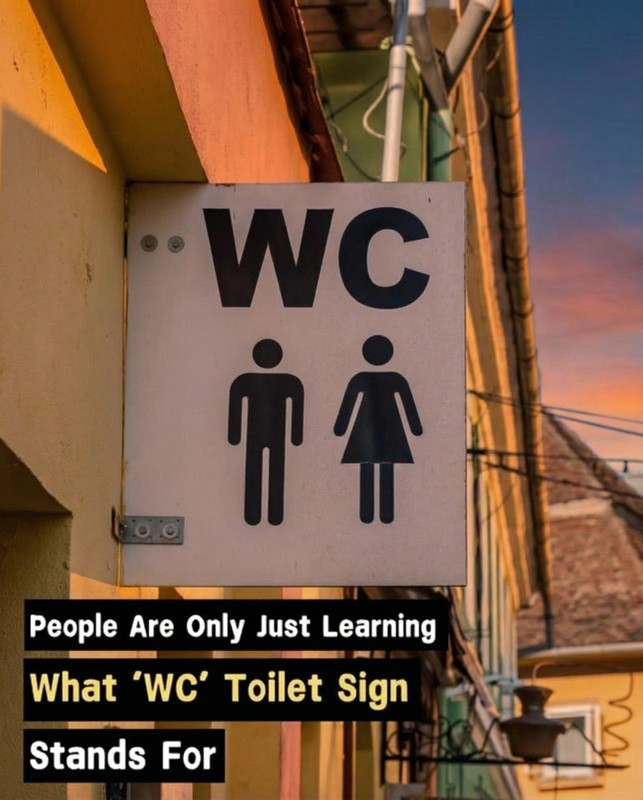
Have you ever spotted the letters “WC” on a restroom door and paused, wondering what they meant? It’s a common moment of curiosity, especially while traveling. Different places use different words for the same everyday space, and those choices are shaped more by history and culture than by strict definitions. While some regions prefer bathroom, restroom, or washroom, others rely on “WC,” showing how language naturally adapts to local norms.
The confusion often comes with a bit of humor. After all, most people don’t actually rest in a restroom or bathe in a bathroom—yet those terms feel completely normal where they’re commonly used. Seeing “WC” for the first time can feel unexpected or even amusing, highlighting how regional language quietly guides our assumptions. These small surprises reveal just how much vocabulary influences everyday understanding, even for something as familiar as finding a restroom.
“WC” is short for “water closet,” a phrase that dates back to the early days of indoor plumbing. At the time, it referred to a small, enclosed room that housed a toilet, separate from bathing areas. As plumbing became standard and home layouts evolved, the term broadened in meaning. Today, “WC” simply indicates a room with toilet facilities, even if the wording sounds old-fashioned to some ears.
Its continued use shows how older terms don’t always disappear—they adjust. As bathrooms combined sinks, toilets, and tubs into a single space, newer labels gained popularity, but “WC” remained practical and widely understood, especially in international settings like airports and hotels. Whether a sign says bathroom, restroom, washroom, or WC, it all leads to the same place, reminding us that language is shaped by history, habit, and everyday convenience.