
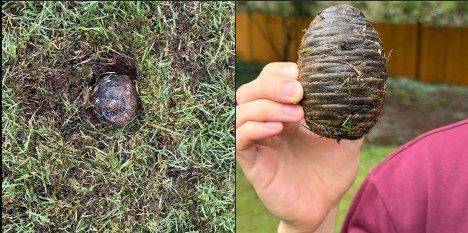
At first glance, it’s easy to mistake this object for something ancient or man-made. Its rough texture, dark coloring, and solid, weighty appearance can make it look more like an artifact than something natural. Found in a backyard or garden, it immediately sparks curiosity—was it buried there, shaped over time, or left behind from something long forgotten? In reality, the explanation is much simpler, though no less fascinating.
To understand what you’re seeing, start by looking at its structure. The rounded form and layered, ribbed surface are key clues. What may appear “molded” or compressed is actually the natural design of a cone from the Deodar cedar. These cones develop high in the tree and eventually fall, often collecting dirt and moisture as they land. Over time, exposure to the elements can darken their color and make them appear denser than they really are.
One reason they stand out is that they don’t resemble the lighter, more familiar pinecones many people recognize. Deodar cedar cones tend to look more compact and sculptural, with a heavier feel and a tighter pattern of scales. This combination gives them a somewhat fossil-like appearance, especially when they’ve been weathered. It’s this unusual look that often leads people to assume they’ve found something rare or ancient.
The real takeaway is how easily nature can surprise us. Objects we pass by every day can take on a completely different character depending on where and how we find them. What seems mysterious at first often has a simple explanation—but discovering that truth is part of the appeal. Sometimes, all it takes is a closer look to turn confusion into appreciation for the small, unexpected details in the natural world.