
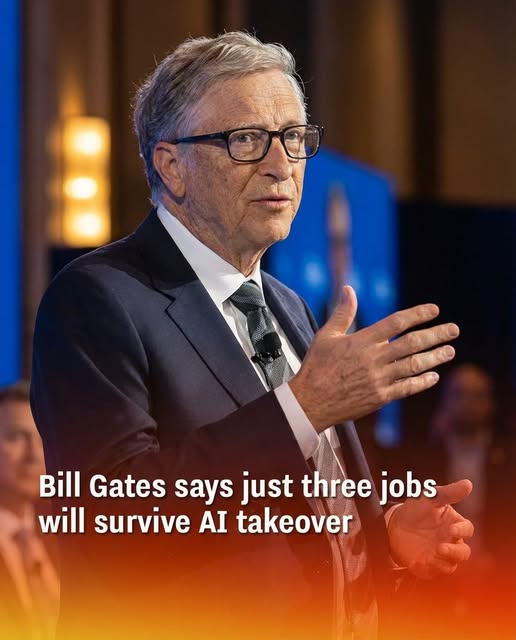
As artificial intelligence reshapes the way industries operate, a more useful question than “Which jobs will disappear?” is “Which skills will endure?” Bill Gates has offered a grounded perspective: AI will transform work, but it won’t erase the need for human contribution. Instead of total replacement, what’s unfolding is a shift in how tasks are performed—and who remains valuable in that process.
The first step to staying relevant is understanding what AI actually does well—and what it doesn’t. AI excels at speed, pattern recognition, and handling large volumes of data. But it still depends on human direction, context, and ethical judgment. This means roles that combine technical understanding with decision-making will continue to matter. Rather than competing with AI, professionals who learn to use it as a tool—enhancing productivity instead of resisting change—will be in a stronger position.
Gates often points to three areas that are likely to remain essential. Software development stands out because AI systems don’t build or refine themselves without guidance. Scientific research, especially in fields like biology, continues to rely on human curiosity and interpretation to drive breakthroughs. The energy sector also requires complex, real-world decision-making where responsibility and long-term planning go beyond automation. These fields highlight a pattern: jobs that involve creation, critical thinking, and accountability are harder to replace.
Ultimately, future-proofing your career isn’t about predicting a single “safe” job—it’s about building adaptable skills. Focus on learning how to think critically, communicate clearly, and work alongside evolving technology. The workplace is changing, but opportunity isn’t disappearing—it’s shifting. Those who stay curious, flexible, and willing to grow will not only remain relevant, but may find themselves more valuable than ever.