
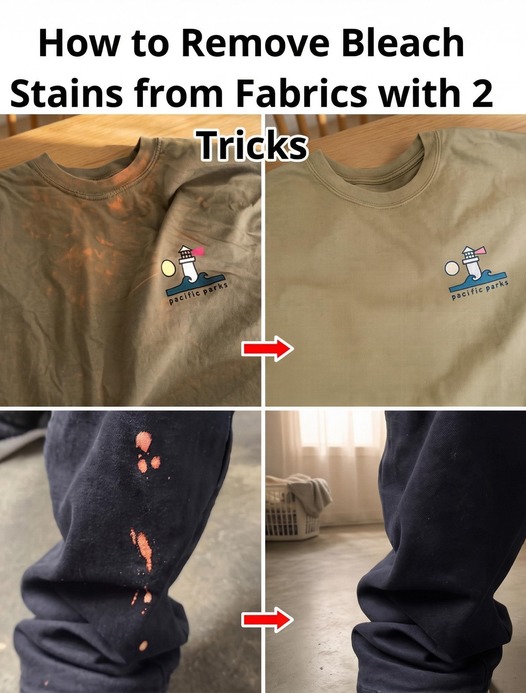
A bleach splash can feel like a disaster, especially when it lands on a favorite shirt or well-loved piece of clothing. Unlike ordinary stains, bleach doesn’t leave something behind—it removes color, creating light patches that stand out immediately. Many people assume the garment is ruined and ready for the discard pile. In reality, while bleach damage can’t always be completely undone, there are practical ways to lessen its impact and make clothing wearable again.
Understanding what bleach does to fabric helps set realistic expectations. Bleach alters the dye in the fibers, which means standard stain removers won’t work. The goal isn’t to “remove” the stain but to reduce how noticeable it looks. In some cases, especially with small or fresh marks, quick action can prevent the discoloration from spreading. Even when a stain has already set, there are techniques that can help blend the area so it doesn’t draw the eye as much.
If the bleach mark is recent, acting fast is key. Rinse the affected area thoroughly with cold water to stop the bleaching process. For added protection, a mild bleach-neutralizing product can help prevent further fading. These solutions are designed to counteract bleach residue and may limit how light the fabric becomes. Always test any treatment on a hidden seam first to be sure the material responds safely.
For older stains, blending is often the most effective approach. Gentle methods that encourage surrounding color to soften the contrast can make a big difference. Using light pressure and patience, you may be able to reduce the harsh edges of the mark, especially on darker fabrics. While results vary, these techniques can extend the life of clothing and help reduce unnecessary waste. Bleach stains don’t always mean the end of a garment—sometimes they’re just a reminder that a little creativity can go a long way.