
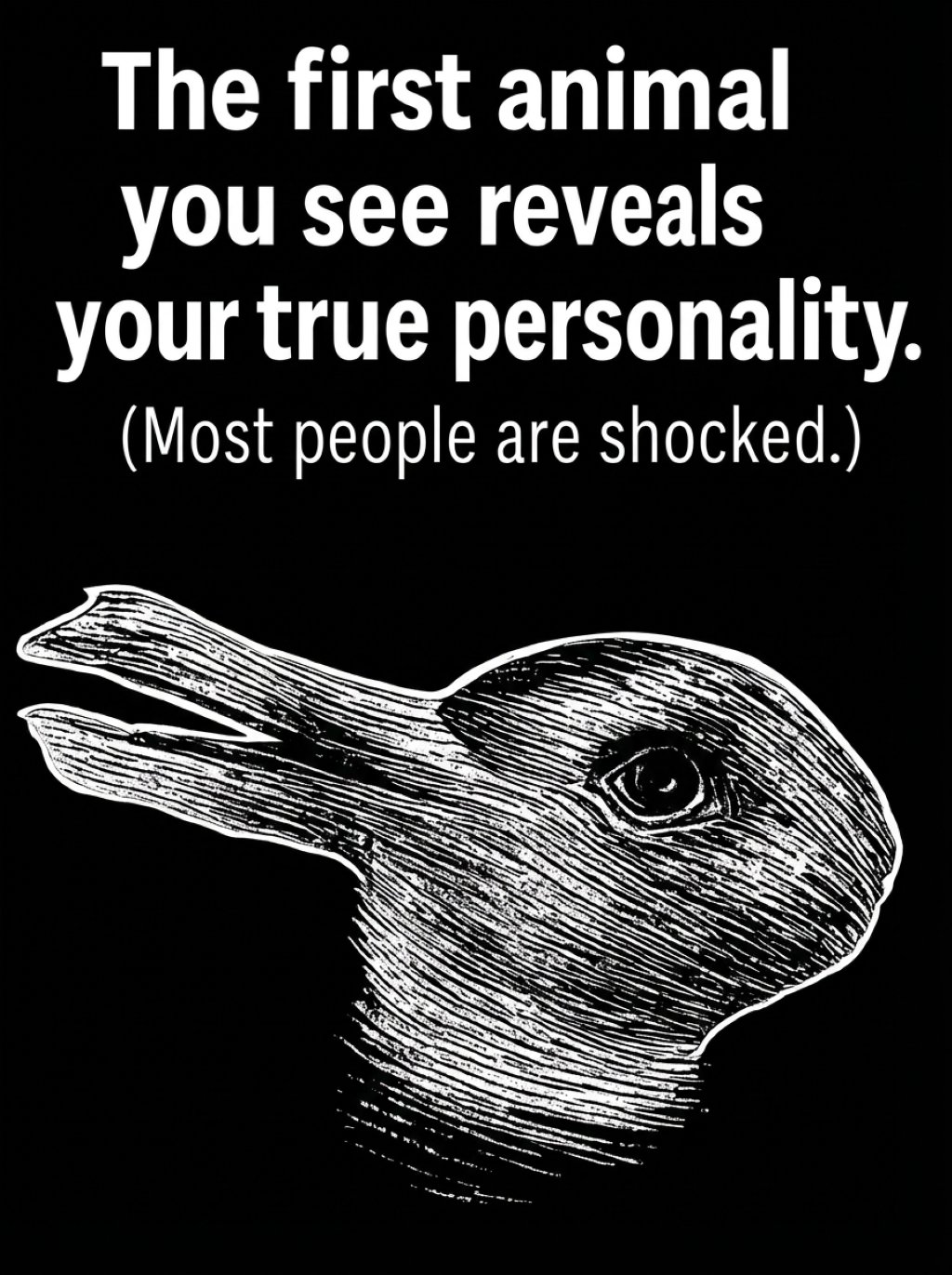
Have you ever discussed the same picture with someone else and realized you each focused on completely different details? Moments like that highlight how personal perception really is. Our brains don’t simply record what our eyes see—they interpret it through layers shaped by experience, habits, and instinct. What immediately stands out to one person may fade into the background for another, reminding us that perception is as much mental as it is visual.
Optical illusions make this process especially visible. When you look at an illusion, your brain forms an interpretation almost instantly, often before you’ve had time to think it through. That first impression is guided by attention patterns and intuition, which is why illusions feel so compelling. They’re not tricks of the eye as much as demonstrations of how quickly the brain tries to make sense of visual information.
A common example involves a single image that hides two animals at once. Some people spot one animal right away, while others are certain the second is more obvious. The image is designed to support both interpretations, and neither is wrong. What’s interesting is how confidently the brain commits to its first choice, often without questioning whether another view exists.
These differences don’t define personality, but they can hint at tendencies. Noticing one figure first may reflect a more structured, detail-oriented way of processing information, while seeing the other may suggest a flexible, imaginative approach. Most people use both styles depending on the situation. Ultimately, optical illusions aren’t about labels—they’re gentle reminders of how adaptable, creative, and varied human perception can be in everyday life.